
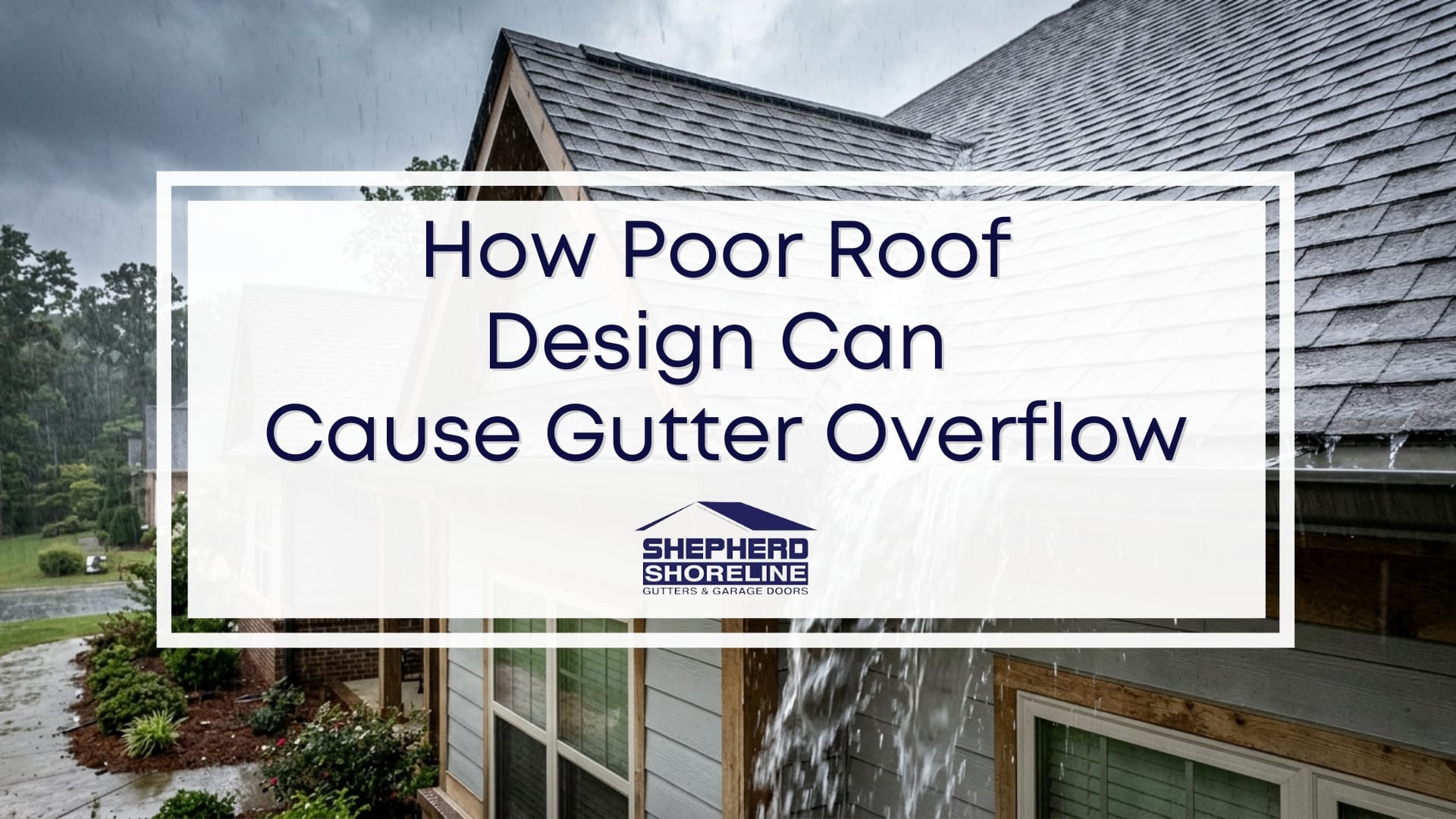
When your Muskegon gutters overflow during heavy rain, it’s easy to assume the system is clogged, damaged, or too small for your home. Leaves, dirt, roofing granules, and other debris can block water flow, while loose sections or poorly placed downspouts can prevent proper drainage. Because these are common gutter issues, cleaning or repairing the system is often the first step homeowners take.
- Why Gutters Are Not Always the Source of Overflow Problems
- Signs the Roof Design May Be the Real Problem
- Solutions Beyond Basic Gutter Repair
- Creating a Drainage System That Matches Your Roof Design
However, some homes continue to experience overflowing gutters even when the channels are clean and properly installed. In these cases, the problem might come from the way the roof collects and directs rainwater. Certain roof designs can send a large amount of runoff toward a small section of gutter. When that happens, the gutter might overflow even though the rest of the system operates as intended.
Let’s explore the warning signs that your roof design might be responsible for repeated gutter overflow and how to address these problems so you can avoid costly repairs that do not address the actual cause.
Why Gutters Are Not Always the Source of Overflow Problems
Some Muskegon homes experience gutter overflow during nearly every storm, even when the gutters are clean, secure, and in good condition. That often happens when a large amount of rainwater reaches one section of the system in a short period. The gutter might work properly under normal rainfall, but become overwhelmed during a downpour because the roof sends concentrated runoff toward a corner or valley. Cleaning the gutters might temporarily remove one possible cause, but it won’t change the amount or speed of water coming off the roof.
Roof design directly affects where water travels, how quickly it moves, and how much runoff reaches each section of gutter. A simple roof with two broad slopes might distribute runoff evenly along long gutter runs. On the other hand, a roof with several slopes, dormers, valleys, and intersecting sections can direct water from multiple surfaces toward the same point, while steeper slopes cause rainwater to move faster, increasing the force of the flow when it reaches the roof edge. When poor roof design creates uneven drainage demands, one section might overflow while the rest of the gutter system works normally.
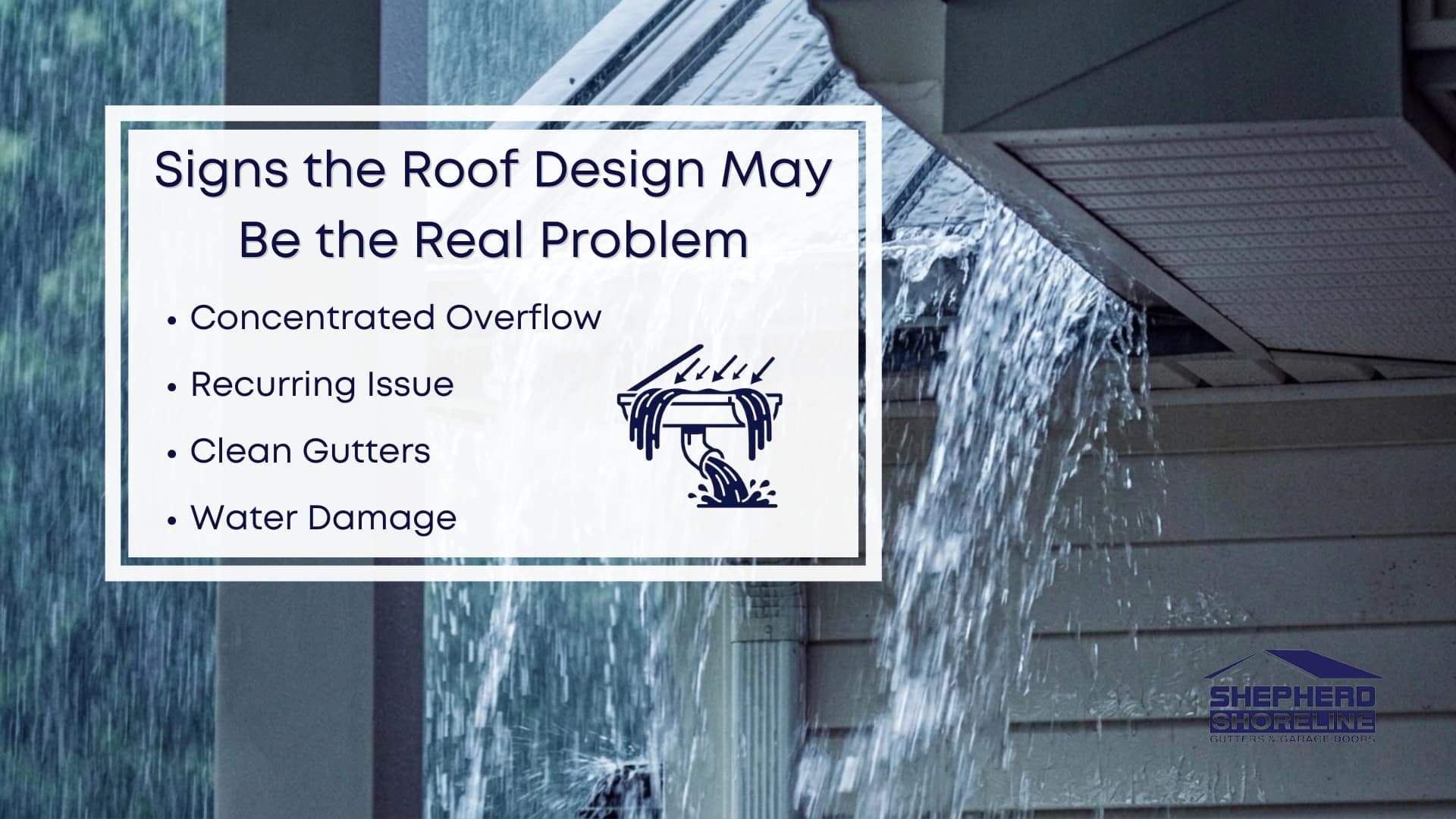
Signs the Roof Design May Be the Real Problem
Roof-related drainage problems often follow a clear pattern. Here are the warning signs that might indicate the roof is directing too much runoff toward specific sections:
Concentrated Overflow
When overflow occurs only in one or two locations, the roof layout might be concentrating water at those points. Perhaps you might notice spilling near an inside corner, below a roof valley, or where an upper roof drains onto a lower section. These areas can receive runoff from several roof surfaces at once. If the rest of your gutters drain normally, the affected section might not be clogged or defective, but simply receive more water than it can collect and move away quickly enough.
Recurring Issue
Have you ever replaced gutter sections, adjusted the gutter pitch, or even added new gutter fasteners, only to see water spill from the same place during the next storm? When water overflow continues even after several repair attempts, you might need to look beyond the gutter itself. A professional inspection can help determine whether roof valleys, slope angles, additions, or intersecting surfaces are placing excessive drainage demands on one part of the system.
Clean Gutters
Clean gutters should naturally allow water to flow toward the downspouts without spilling over the edges. If you inspect the system and find no debris, but still see water pouring over during storms, consider how the water is entering the gutter. A steep roof or deep valley can create a fast-moving stream that shoots past the gutter edge or splashes over the front. In that situation, increasing cleaning frequency won’t solve the problem because debris is not restricting the flow.
Water Damage
The area below an overflow point can provide important clues about how long the problem has been occurring. Look for washed-out soil, dark stains on the siding, peeling paint, wet fascia boards, or moisture near the foundation. Damage concentrated below one roof valley or corner suggests that a large amount of runoff is being released in that specific location. Addressing the flow pattern early can help protect your Muskegon home from further water damage.
Solutions Beyond Basic Gutter Repair
When overflow is caused by poor roof design, gutter cleaning or repairs might not be enough. Consider these solutions to improve capacity, control high-speed water, and distribute runoff more evenly:
Capacity
Installation of larger Muskegon gutters can help when the existing system cannot hold the volume of water coming from a broad or steep roof surface. Meanwhile, an additional downspout might allow water to leave the gutter faster instead of traveling through a long channel toward a single outlet. A long gutter run with only one downspout can backflow even when the channel is clean. Having an extra outlet near a high-flow area can reduce pressure on the rest of the system and improve drainage.
Roof-to-Gutter Transitions
The point where water moves from the roof into the gutter can sometimes create a bottleneck. Drip edges, roof overhangs, fascia boards, valley endings, and uneven gutter placement can prevent water from entering the channel smoothly. Water might run behind the gutter, strike the outer edge, or collect in a narrow corner before spilling over. Evaluating these roof-to-gutter transitions can reveal problems with gutter placement or roof geometry that are easy to miss during basic maintenance.
Runoff Distribution
In some cases, the best solution is to modify the drainage pathway so that a gutter section won’t receive runoff from several roof surfaces at once. That might involve redirecting an upper downspout, adding another drainage outlet, or extending a downspout to ensure the water does not empty directly onto a lower roof. When you spread runoff across more than one section, you can reduce the pressure on problem areas and help the entire system drain more efficiently during heavy rain.
Additions
Splash guards and rain diverters can help manage runoff at roof valleys, inside corners, and other high-flow locations. A splash guard is usually installed along the outer edge of the gutter to prevent fast-moving water from shooting over the side. A diverter can redirect water so it enters a wider section of gutter instead of striking one concentrated point. These additions can be useful when poor roof design causes water to rush toward a small area, but must be positioned carefully.
Creating a Drainage System That Matches Your Roof Design
Shepherd Shoreline provides Muskegon gutter repair and installation services for homeowners dealing with leaks, overflow, poor drainage, and repeated water problems. Our competent technicians can evaluate your roofline and gutter system, explain what might be causing the issue, and recommend practical improvements. Contact us today at (231) 780-2847 or here to schedule an inspection. Let us help you develop and maintain a gutter system that works with your roof instead of struggling against it.