
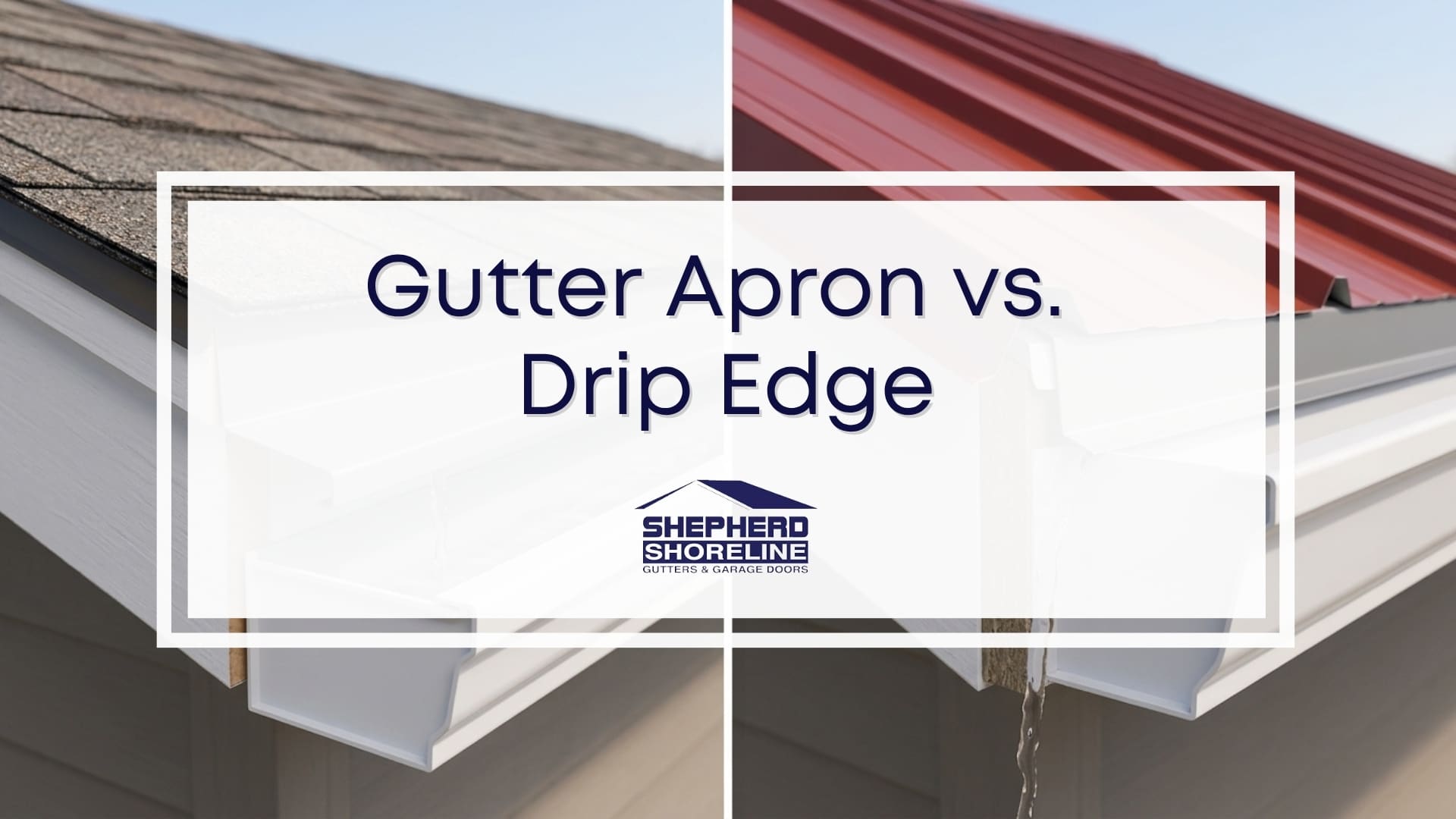
Water management along your roofline depends on more than having gutters in place. Rain and melting snow need a clear path from the roof surface into the gutter channel without reaching the fascia or other areas that are vulnerable to moisture. Roof-edge flashing creates that path, controlling where water goes as it reaches the edge of the roof. Two common types are the drip edge and gutter apron. Both can look similar, but their shapes and placement give them different functions.
- What a Drip Edge Is Designed to Do
- What a Gutter Apron Does Differently
- Common Installation Problems
- Protecting the Roofline With the Right Flashing and Gutter Setup
Let’s explore how drip edges and gutter aprons work, how these two types of flashing differ, and why the right roofline setup matters for dependable drainage.
What a Drip Edge Is Designed to Do
A drip edge is a piece of metal flashing installed around the edges of a roof to help direct runoff away from vulnerable roofing components. It’s typically installed beneath the roofing materials along the eaves and rakes, creating a protective barrier between flowing water and the edges of the roof decking and fascia. As rainwater moves down the shingles, the flashing encourages the water to move outward rather than follow the underside of the shingles or curl back toward the wood.
Drip edge flashing is particularly useful for protecting exposed roof edges from repeated moisture intrusion. Without adequate flashing, water can cling to the roof edge and travel backward, potentially wetting the fascia or decking. Properly installed flashing creates a cleaner path for water to leave the roof. However, while a drip edge provides important protection, it does not always extend far enough to compensate for a large space between the roof edge and the gutter.
What a Gutter Apron Does Differently
A gutter apron is another type of roof-edge flashing, but its shape and placement are designed specifically to help water enter the gutter. It extends farther over the back edge of the gutter than a standard drip edge. The additional coverage helps bridge the space between the roof and the gutter channel. Instead of allowing water to fall near the back of the gutter or travel behind it, the apron helps guide runoff directly into the gutter where it can be carried to the downspouts.
The longer profile of a gutter apron can be helpful when the roof edge and gutter do not line up closely enough for standard flashing to provide dependable coverage. A gutter apron offers added protection for the fascia while reducing the chance that water might bypass the gutter altogether. It does not replace the need for properly positioned gutters, but it can help create a more continuous drainage path from the roofing material into your Muskegon gutter system.
Common Installation Problems
Even the right flashing cannot provide dependable protection if the surrounding roof and gutter components are poorly positioned. Several installation issues can interrupt the path water should follow from your roof into the gutter.
Low Gutters
A gutter mounted too far below the roof edge might not catch all of the runoff coming from the shingles. Water can travel over the edge with enough speed to pass through the space between the flashing and gutter, especially during heavy rain. A low gutter can further make an otherwise properly installed drip edge less effective because the flashing does not extend far enough to direct water into the channel.
Wrong Overlap
A drip edge should direct water outward, but problems can occur when the flashing ends behind your Muskegon gutters instead of extending over its back edge. In that arrangement, water can follow the flashing downward and drain between the gutter and fascia. Depending on the roof design, installing or adding a gutter apron might provide the additional overlap needed to guide water into the gutter.
Flashing Gaps
Roof-edge flashing usually consists of multiple sections installed along the roofline, and those sections need sufficient overlap to maintain continuous protection. Gaps between pieces can give water an opening to reach the fascia or roof decking. Small installation errors might not create an obvious leak during light rain, but can become more noticeable when storms produce greater volumes of runoff.
Retrofit Issues
Older homes can present additional challenges because the roof, fascia, and gutters might have been installed or replaced at different times. The existing roofline might not match modern Muskegon gutter dimensions, and previous repairs might have left unusual gaps or layers of flashing. Trying to slide new flashing into place without evaluating the entire setup can create poor overlap or even damage roofing materials.
Protecting the Roofline With the Right Flashing and Gutter Setup
Effective roof drainage depends on several components working together. The shingles move water toward the roof edge, the drip edge or gutter apron guides it away from vulnerable roof materials, and the gutter system collects that water and directs it toward the downspouts. A problem with any part of that sequence can allow water to reach areas where it does not belong. That’s why it’s important to pay attention to warning signs around your roofline.
If you notice water running behind your gutters, stains along the fascia, or unusual dripping during heavy rain, Shepherd Shoreline is here to help you identify the cause. Our competent Muskegon gutter professionals can check gutter positioning, flashing coverage, drainage patterns, and other roofline conditions and recommend practical improvements to protect your roofline from potential water damage. Contact us today at (231) 780-2847 or here to have your gutter and roof-edge drainage setup evaluated.