Did you know that combining certain metals can weaken your entire gutter system? Even if every component seems durable on its own, direct contact between incompatible metals can create a reaction that accelerates corrosion. Rain and melting snow can make the problem worse, especially when water remains around joints and attachments. If the damage goes unnoticed, you might eventually face gutter leaks around your home. Let’s explore how galvanic corrosion in gutters starts, the common metal combinations that can cause gutter corrosion, the warning signs you can recognize, and what you can do to protect and preserve your Muskegon gutter system.
- What Galvanic Corrosion Is and How It Affects Gutters
- Common Metal Combinations That Create Corrosion Risks
- Warning Signs of Galvanic Corrosion in Gutter Systems
- How Professionals Prevent and Address Galvanic Corrosion
- Protecting Your Gutters From Premature Corrosion
What Galvanic Corrosion Is and How It Affects Gutters
Galvanic corrosion is a type of electrochemical corrosion that can develop when two different metals are electrically connected and exposed to moisture that conducts electricity. Rainwater or water containing dissolved salts can provide the moisture needed for that reaction. One metal in the pair corrodes faster than it would on its own, while the other is relatively protected. In gutter systems, it can happen where a metal bracket, screw, flashing, or downspout connects to a different metal. Repeated wetting makes these connections vulnerable, particularly if water remains trapped around the hardware.
The two metals do not deteriorate at the same rate because both react differently in the presence of conductive moisture. For example, aluminum can deteriorate faster when it touches copper under wet conditions. Galvanic corrosion differs from ordinary rust, the reddish-brown corrosion associated with iron and steel. Aluminum does not rust the same way as steel, but it can corrode, forming pale deposits and small pits. Therefore, not every stain signals galvanic corrosion. The location of the damage, the materials involved, and how quickly the corrosion spreads can help determine the actual cause.
Common Metal Combinations That Create Corrosion Risks
Gutter fasteners, connectors, and nearby roofing materials can introduce other metals into the system. Though not every combination of different metals causes serious problems, certain pairings deserve closer attention when you choose gutter materials or replace existing parts.
Aluminum and Copper
Aluminum gutters are lightweight and resist ordinary rust. However, pairing them directly with copper brackets or connectors can increase the risk of corrosion. When moisture bridges the metals, the aluminum generally corrodes, and the damage often appears around the point of contact. Copper is durable, but that does not mean it is compatible with every material around it. If you want copper details on your Muskegon home, it’s essential to consider their placement and how the components connect to other metals in your existing gutter system to prevent damage.
Galvanized Fasteners
Galvanized steel screws and brackets have a protective zinc coating that helps shield the steel underneath. These can work well in properly designed installations, but are not automatically compatible with every gutter material. For instance, zinc-coated hardware in direct contact with copper can lose its coating faster in wet conditions. Once the zinc deteriorates, exposed steel can develop rust, weakening the attachment over time. Corrosion might occur around other mixed-metal connections depending on the specific materials and conditions.
Copper Roof Runoff
Direct metal contact is not the only concern. Rain flowing over copper roofing or decorative features can carry small amounts of copper compounds into gutters below. That runoff can accelerate corrosion on exposed aluminum. Copper-bearing water can even affect zinc-coated components. It’s different from a simple direct-contact galvanic connection, but it can create similar localized damage. If your home has copper roofing details, pay attention to where water flows. Assess the drainage path and choose suitable gutter materials to reduce the risk.
Warning Signs of Galvanic Corrosion in Gutter Systems
Since gutter corrosion often begins in small areas, you might miss it during routine spring cleaning. Inspect the places where two materials connect and look for signs that might indicate a developing issue.
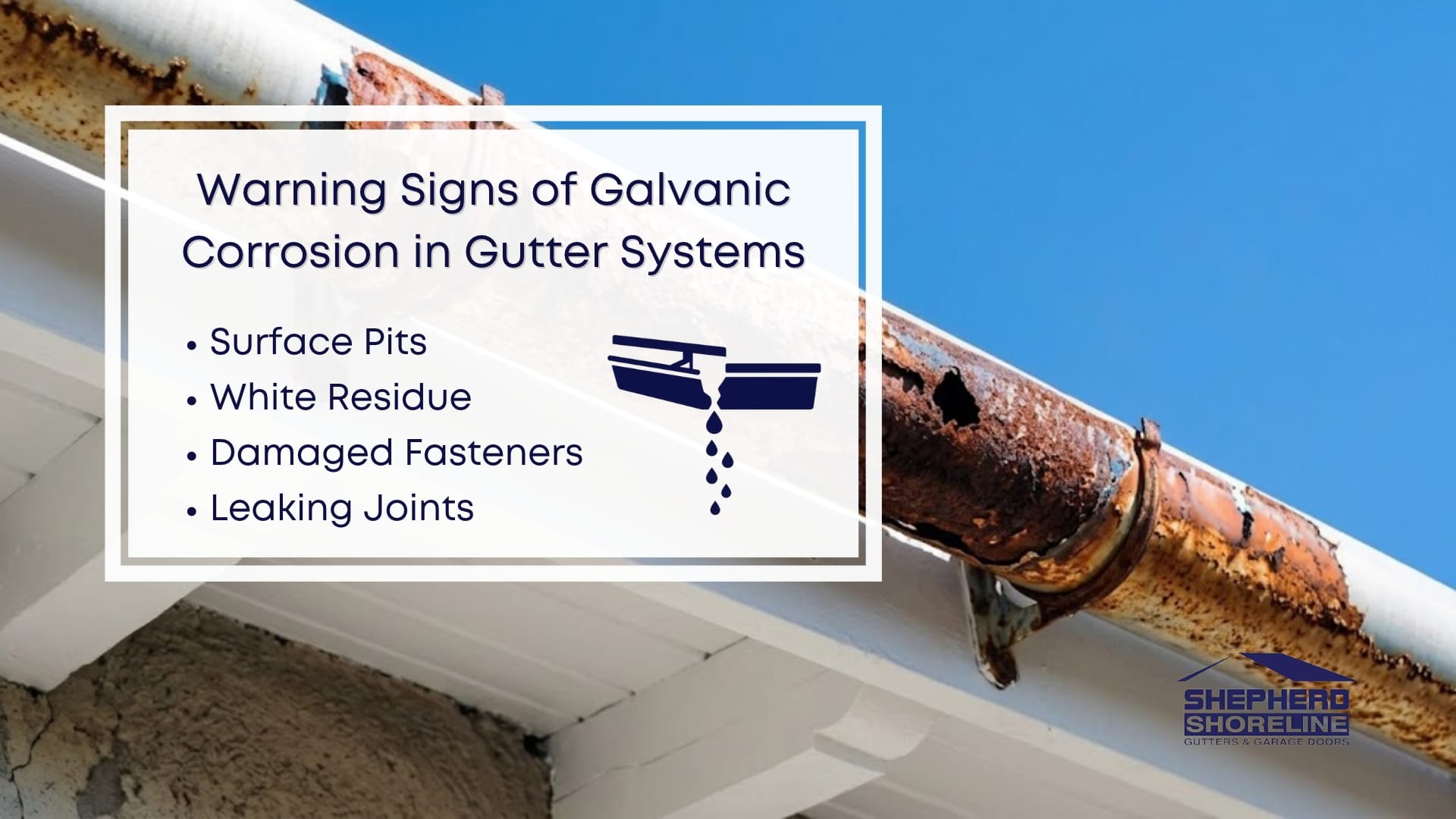
Surface Pits
Tiny holes or rough, uneven patches near a metal connection can suggest localized deterioration. The damage might be concentrated where a screw, bracket, or fitting touches the gutter. A small surface pit can gradually deepen until water passes through it. If you notice several pits clustered near a connection, make sure to check the surrounding hardware. The pattern might point to incompatible metals, although trapped debris and other forms of corrosion can cause similar damage.
White Residue
Aluminum can develop white corrosion products as its surface reacts with water and other contaminants. If you see powdery buildup around a copper contact point or another metal attachment, a closer inspection might be worthwhile. These deposits, however, do not prove galvanic corrosion in gutters, since aluminum can oxidize without touching another metal. Cleaning away the white residue might improve the appearance temporarily, but it won’t remove an ongoing corrosion source.
Damaged Fasteners
Flaking coatings, rust stains, loose attachments, or dark discoloration of screws, brackets, or hangers that connect different materials might signal corrosion affecting the hardware. Galvanic action can speed up the loss of a protective zinc coating under unfavorable conditions. As these parts weaken, gutters can shift or sag, allowing water to collect instead of flowing toward downspouts. Loose or visibly damaged hardware must be evaluated before the surrounding gutter becomes unstable.
Leaking Joints
Leaks near seams and downspout connections might develop when corrosion creates tiny openings or weakens the surrounding material. During rainfall, you might notice dripping from a joint or water running down the siding. Gutter sealant failure can produce similar symptoms, so a leak alone does not establish the cause. However, if corrosion is visible near mixed-metal fittings, adding another layer of sealant might hide the issue for a while without addressing the deterioration underneath.
How Professionals Prevent and Address Galvanic Corrosion
Gutter corrosion prevention starts with careful selection of materials that can work together. Professionals often consider the gutters, hangers, screws, flashing, downspouts, and other components that come into contact with moisture and choose hardware suited to the system and local outdoor conditions. When different metals must be used, suitable nonconductive gaskets, washers, tapes, or other protective barriers can help prevent direct electrical contact. These barriers must be properly placed and appropriate for the materials involved. Professionals might examine the roof above the gutters because copper-containing runoff can still create problems even when the metals are physically separated.
When corrosion is already present, a qualified Muskegon gutter repair technician can assess whether the damage is limited to replaceable hardware or has affected the gutter itself. Minor issues can be addressed by changing incompatible components and correcting their connections. However, heavily pitted sections or metal that has developed holes often need replacement. Sealant might temporarily stop a leak, but it cannot restore metal that has lost strength or prevent further deterioration when the underlying cause remains. Moreover, proper gutter installation matters, as correct drainage slope, secure attachments, and connections that do not trap water can all help your gutter system perform reliably for years.
Protecting Your Gutters From Premature Corrosion
Galvanic corrosion in gutters might begin around a single screw or joint, but ignoring it can lead to leaks, sagging gutters, damaged fascia, and unwanted water near your foundation. If you spot pitting, unusual deposits, or loose attachments, arrange an inspection before a small concern becomes an expensive repair. Let Shepherd Shoreline review your gutter needs and help you explore gutter options that suit your home. Our seasoned Muskegon gutter repair specialists can inspect your gutter system, identify potential corrosion risks, evaluate damaged sections, and recommend practical gutter repair or replacement solutions. Contact us today at (231) 780-2847 or here to discuss your gutter concerns.