
If you’ve ever noticed water pooling in your gutters or spilling over the sides during a rainstorm, there’s a good chance the issue isn’t the gutter itself, but the gutter pitch. A properly set gutter pitch is what keeps rainwater flowing smoothly toward the downspouts and away from your home. Without that slight angle, even a newly-installed gutter system can fail to move water where it needs to go. Let’s explore how gutter pitch works, why it matters, and what can happen when it’s not set correctly.
- What Gutter Pitch Actually Means
- What Happens When Gutters Are Too Flat or Too Steep
- Signs Your Gutter Pitch Is Incorrect
- How Professionals Adjust and Measure Gutter Slope
- Ensuring Proper Drainage for Long-Term Protection
What Gutter Pitch Actually Means
Gutter pitch refers to the slight downward angle built into your Muskegon gutter system so water can flow toward the downspout. It is not something that’s obvious from the ground. In fact, a properly pitched gutter often looks almost level to the eye. But that subtle slope, often about a quarter inch for every 10 feet of gutter, is what keeps water moving instead of allowing it to sit in place.
When the gutter pitch is off, water begins to collect in sections of your gutter and stays there long after the rain stops. Over time, that trapped water adds weight and increases the risk of gutter sagging, corrosion, and overflow. A properly installed system by a skilled Muskegon gutter installer ensures that water flows consistently, reducing the risk of flooding and other long-term issues.
What Happens When Gutters Are Too Flat or Too Steep
When the gutter pitch is not balanced correctly, your gutters can struggle in several ways. A slope that is too flat can leave water sitting in the system, while a slope that is too steep can cause water to move too quickly. Both problems can lead to damage, especially during changing weather conditions in Michigan.
Standing Water
When gutters are too flat, water does not move efficiently toward the downspout. Instead, it settles in low areas and stays there. Standing water can slowly wear down the inside of the gutter, especially if the gutter material is metal. Constant moisture can lead to corrosion, rust spots, and weak sections that are more likely to crack or fail.
Rain Overflow
Flat or poorly sloped gutters can overflow during rainstorms because water is not draining out fast enough. Heavy rains can put a lot of pressure on a gutter system in a short amount of time. When water backs up instead of flowing out, it can spill over the sides and soak the siding, pool near the foundation, and wash out soil around your home.
Ice Buildup
Poor pitch becomes an even bigger problem during freeze–thaw cycles. When water stays trapped in the gutter, it can freeze as temperatures drop, creating ice buildup that adds extra weight and puts stress on the brackets and gutter fasteners. As the ice melts and refreezes, it can increase the chance of cracks and damage along the roofline.
Downspout Overshoot
Gutters that are too steep can create a different kind of problem. Instead of guiding water smoothly to the downspout, such gutters might cause it to move too fast. When that happens, water can rush past the downspout opening. The result is poor drainage and gutter overflow at the exact point where water is supposed to exit the gutter system.
Signs Your Gutter Pitch Is Incorrect
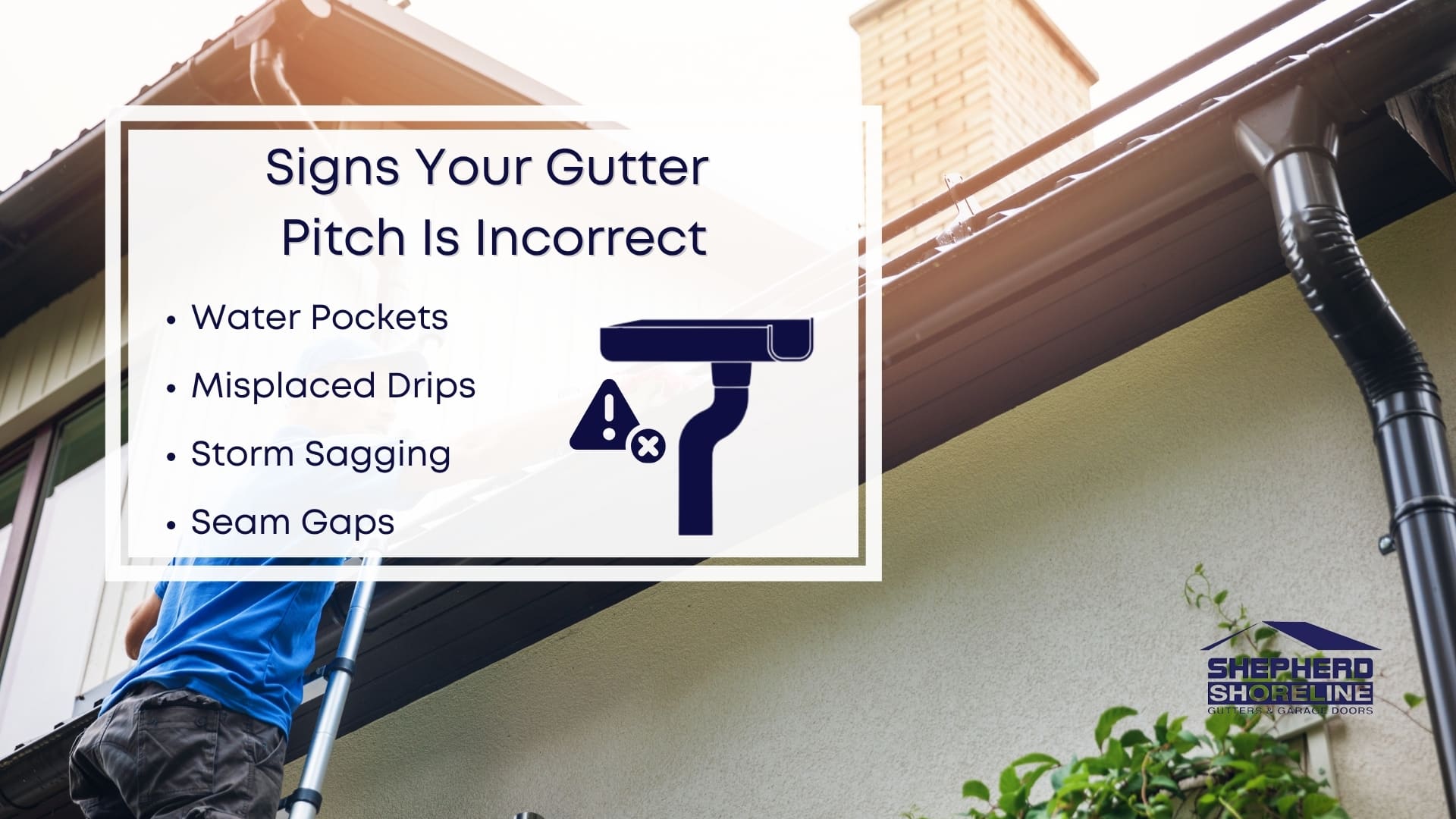
When the gutter pitch is off, your gutter system usually gives you warning signs before more serious damage occurs. Some of these problems are easy to spot, while others become noticeable only after a storm. Paying attention to these signs can help you fix drainage issues early and avoid more expensive repairs later.
Water Pockets
One of the clearest signs of poor gutter pitch is water pooling between hangers. Instead of moving steadily toward the downspout, rainwater stays trapped in low sections of the gutter. That standing water adds extra weight and can speed up wear on the system. If you notice water sitting in the gutter long after the rain has stopped, the slope may need adjustment.
Misplaced Drips
If water is dripping or overflowing from a section far from the downspout, that usually points to a pitch problem. Water should move steadily toward the outlet, not spill over random edges along the way. When it does, it means the gutter is too flat, uneven, or sloped in the wrong direction, and it can send water directly against your siding or too close to the foundation of your home.
Storm Sagging
Gutters that sag after storms might be dealing with an incorrect slope. While debris buildup and weak fasteners can contribute to the problem, poor gutter pitch often makes it worse, allowing water to collect in certain sections. That extra weight pulls on the gutter system and can cause it to dip over time. Once gutter sagging starts, drainage usually becomes even less effective.
Seam Gaps
Visible separation at seams or corners can signal pitch-related problems. When water sits in one area, it places more stress on the gutter joints. Those connections can begin to pull apart, especially during repeated rain and freeze-thaw cycles. If you see gaps forming where sections meet, it might be time to have the slope checked by a Muskegon gutter installer.
How Professionals Adjust and Measure Gutter Slope
Correcting gutter pitch takes more than just lifting one side of the gutter and hoping water flows better. A proper adjustment requires careful measurement, support corrections, and a close look at the condition of the system. A trained Muskegon gutter installer usually inspects the entire gutter run before making changes to ensure the slope works consistently from end to end.
- Hanger Reset
Professional Muskegon gutter installers often adjust gutter slope by repositioning hangers and brackets. These support points hold the gutter at the correct angle, so even a small adjustment can improve water flow. If hangers are spaced poorly or have loosened, the gutter might begin to dip or flatten in sections. Resetting them helps restore the intended gutter pitch and gives the system better support.
- Run Re-Slope
Long gutter runs often need a more careful adjustment, as even a slight error can affect drainage across a large section. Professionals might re-slope the full run so that water flows consistently toward the downspout. That’s especially important on longer roof edges where water has more distance to travel. A proper re-sloping job can prevent water overflow and uneven wear throughout the system.
- Fascia Check
Before making adjustments, professionals inspect the fascia board behind the gutter. If the wood is soft, rotted, or weakened by moisture, simply changing the slope won’t solve the problem. The gutter needs a stable surface to stay secure and maintain the right angle. Checking fascia integrity first ensures the adjustment lasts and that the gutter system is not being attached to damaged material.
DIY gutter adjustments often create new drainage problems because the slope has to be precise, not just in one area, but across the entire system. A small change in a section without checking the full run can send water in the wrong direction, increase overflow in another spot, or place extra strain on brackets and seams. That’s why many homeowners are better off having a Muskegon gutter installer handle gutter pitch corrections with the right tools and measurements.
Ensuring Proper Drainage for Long-Term Protection
If your gutters are sagging, leaking, overflowing, or holding water, Shepherd Shoreline is ready to help with dependable gutter installation, repair, and maintenance services. Our experienced Muskegon gutter installers can assess the entire system, adjust the gutter pitch, identify weak points, and make sure water is directed where it should go. We work carefully to improve drainage and help protect your home from water damage. Reach out to us today at (231) 780-2847 or here to schedule a consultation.