
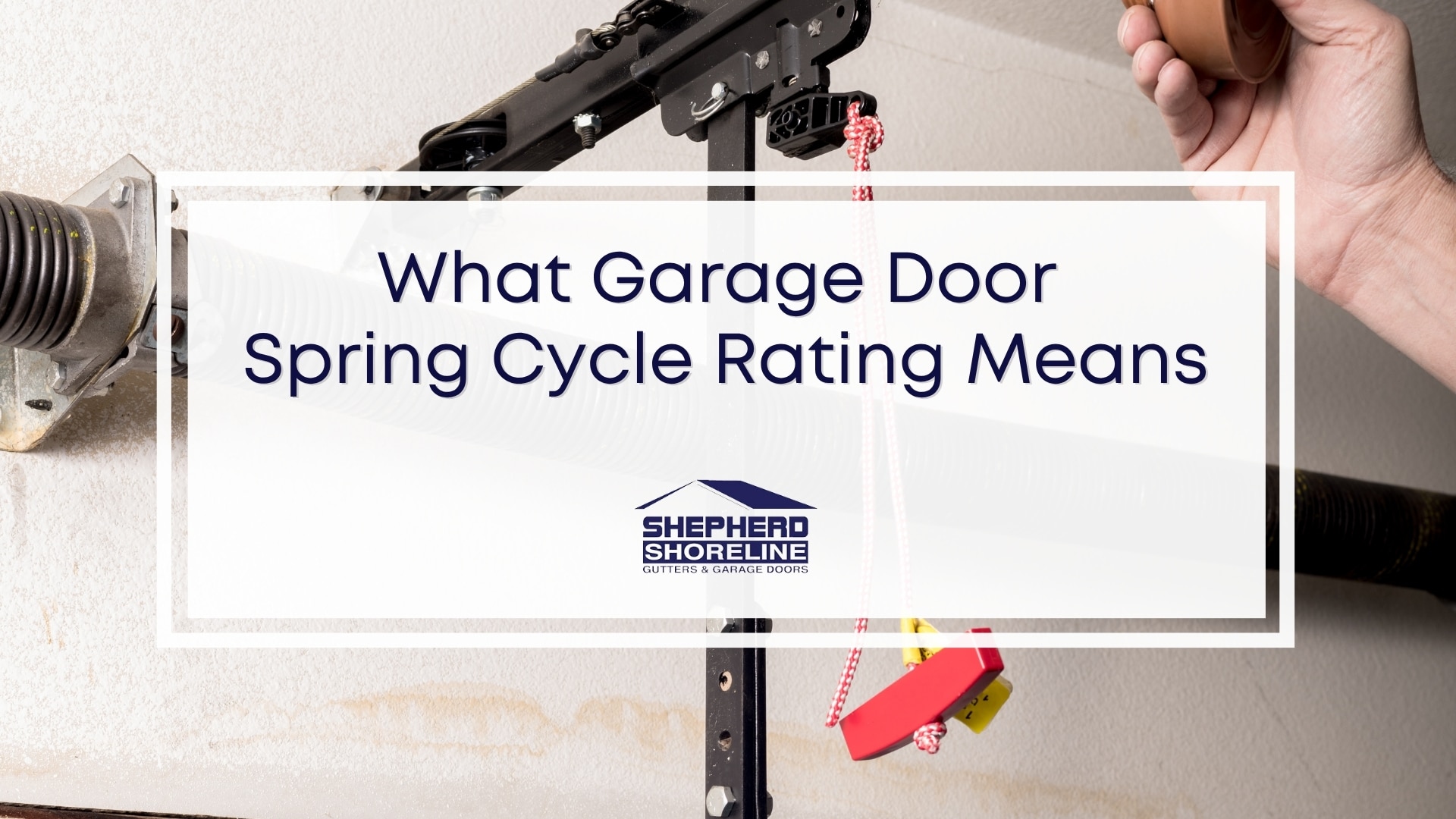
One of the most important parts behind every Muskegon garage door system is the torsion spring, a tightly wound component that does the heavy lifting every time you open and close your door, allowing the system to move safely and with less strain. When it starts to wear out, you might notice slow movement, unusual noise, or a door that suddenly feels much heavier than it should.
- What a Garage Door Torsion Spring Actually Does
- Understanding Cycle Ratings and Lifespan
- Warning Signs a Torsion Spring Is Near Failure
- Extending the Life of Your Garage Door System
It’s essential to understand how these springs work so you can avoid getting caught off guard and plan ahead for garage door repairs or spring replacement. Knowing what affects spring lifespan can help you protect your garage door system from extra wear. Let’s explore how torsion springs operate, what cycle ratings mean, and how such ratings help predict when a spring might break.
What a Garage Door Torsion Spring Actually Does
A torsion spring is the tightly wound spring mounted above your garage door opening. Its main job is to counterbalance the full weight of the door so the door does not feel as heavy as it really is. When the door closes, the spring winds up and stores mechanical energy. When the door opens, that stored energy is released to help lift the door. That’s what allows you to open a heavy garage door smoothly, whether you use a smart garage door opener or lift it by hand.
Torsion systems work differently from extension systems, which use springs mounted along the horizontal tracks. Extension springs stretch and contract as the door moves, while a torsion spring twists under tension. In many cases, torsion systems offer smoother motion, more controlled lifting, and better balance. That’s why many modern Muskegon garage door setups rely on torsion spring systems instead of older extension spring designs.
Understanding Cycle Ratings and Lifespan
A cycle rating tells you how many times a torsion spring is designed to handle a full opening and closing of the garage door. One full open and one full close equals one cycle. Many standard residential springs are rated for about 10,000 cycles, while higher-cycle upgrades might be rated for 25,000 or more. The cycle rating matters more than many homeowners realize because the lifespan of a spring depends heavily on how often you use your garage door each day.
For example, if your household opens and closes the door four times a day, a 10,000-cycle torsion spring might last several years. But if the garage serves as your main entry point and the door cycles much more often, that lifespan can burn faster than expected. The weight of the garage door can further shorten spring life, as heavier doors place more strain on the spring with every movement. That’s why, other than frequency of use, the door size and material are critical considerations when estimating when a spring might wear out or fail.
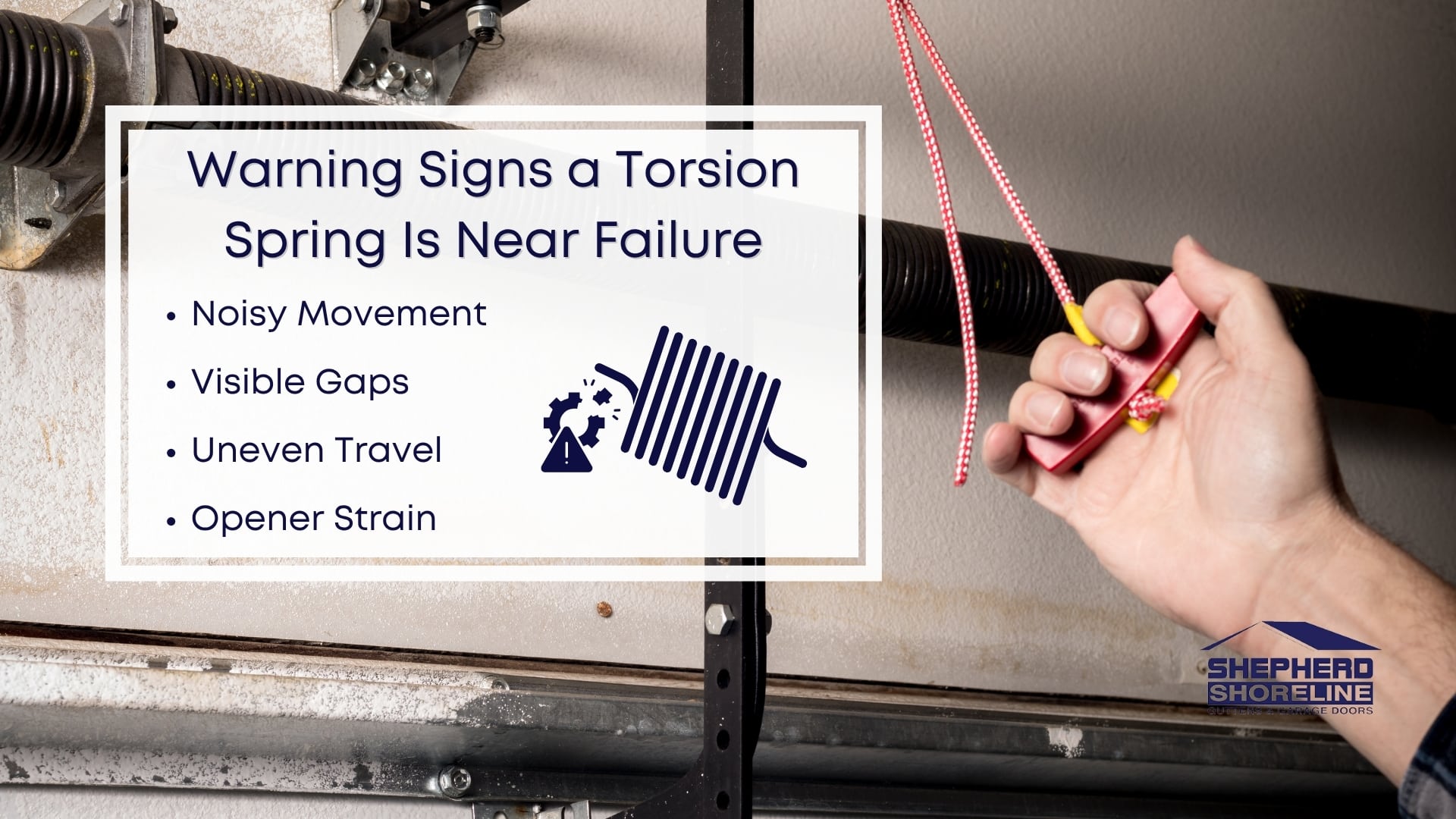
Warning Signs a Torsion Spring Is Near Failure
As a torsion spring wears down, your garage door usually gives you a few warnings before the spring finally breaks. Paying attention to these changes can help you act early and avoid bigger problems with your door, opener, or tracks. Here are the most common signs to watch for:
- Noisy Movement
If your garage door suddenly sounds louder than usual, that can be an early sign that the torsion spring is wearing out. Moreover, you might hear popping, creaking, or sharp snapping noises during operation as the spring struggles to handle the weight of the door. In some cases, a spring that finally breaks can make a very loud bang that often surprises homeowners.
- Visible Gaps
A healthy torsion spring should look tightly wound when it is in place. If you notice a visible gap in the coil, that can mean the spring has already broken or is very close to failure. Even a small separation can be a sign that the spring is no longer holding tension the way it should.
- Uneven Travel
When a torsion spring starts to weaken, the door might no longer move evenly, and you might see one side rise faster than the other, or the door might look crooked as it opens and closes. Uneven movement can put added pressure on other parts of the door, including the rollers, cables, and opener.
- Opener Strain
A failing torsion spring forces the garage door opener to work much harder than normal, and you might notice jerking motions, hesitation, or a door that seems unusually heavy. If your opener sounds strained or struggles to complete a full cycle, the problem might not be the motor at all, but the torsion spring that’s no longer doing its share of the lifting.
Trying to repair a torsion spring on your own can be extremely dangerous. These springs are held under heavy tension, and that stored force can release without warning. A mistake during DIY repair can lead to serious injury or major damage to the door system. Safe repair requires specialized tools, proper training, and careful handling, which is why it’s best left to a qualified Muskegon garage door repair professional.
Extending the Life of Your Garage Door System
The best way to get more life out of your Muskegon garage door system is to stay ahead of wear instead of waiting for something to break. Routine inspections can help catch worn parts, balance issues, and early torsion spring damage before these turn into expensive repairs. Regular lubrication can reduce friction on moving parts and further support smoother, quieter garage door operation.
If you want to protect your Muskegon garage door and avoid the damage a broken torsion spring can cause, Shepherd Shoreline is ready to help. Our seasoned garage door repair technicians know how to spot worn components, address torsion spring problems, and prevent minor issues before major damage happens. Contact us today at (231) 780-2847 or here to schedule expert garage door service.