
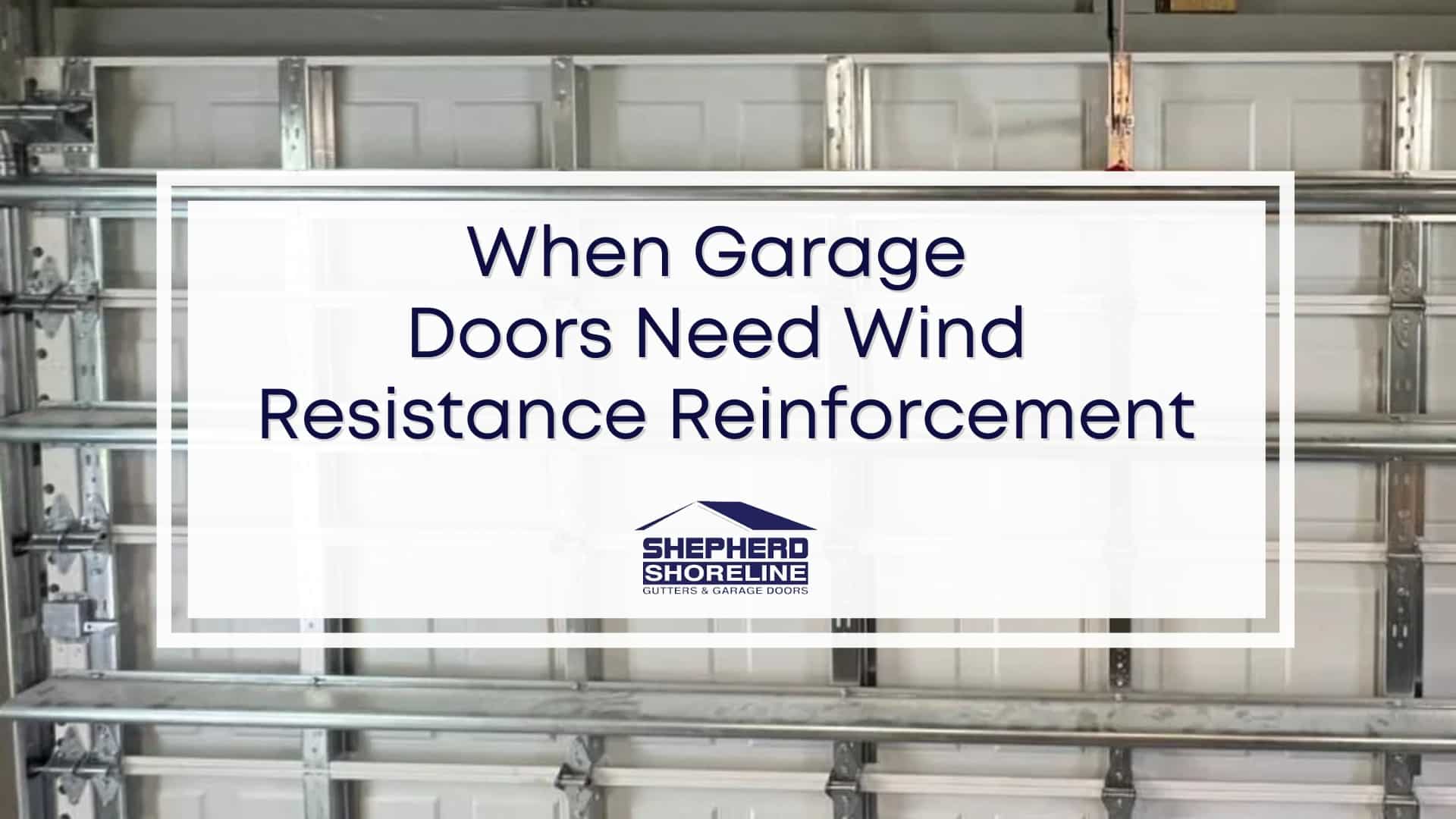
The garage door is one of the most exposed parts of your home during severe weather. When strong winds hit, that wide opening can become a weak point if the door is neither built nor reinforced to handle the pressure. A door that bends, pulls away from its tracks, or fails under stress can lead to costly repairs. That’s why wind resistance matters.
- What Wind Resistance Bracing Does for Garage Doors
- When Reinforcement Becomes Necessary
- Types of Garage Door Bracing Systems
- Strengthening Your Garage Door for Long-Term Protection
In places near the lakeshore or in other storm-prone areas, including Fruitport, building standards require wind-rated doors or added reinforcement to reduce the risk of failure. If your current system wasn’t designed for those conditions, adding garage door bracing might be the smartest upgrade you can make to protect your home more effectively.
Let’s explore how garage door bracing works, why it matters, and when reinforcement is required.
What Wind Resistance Bracing Does for Garage Doors
A garage door is rated for wind resistance based on how much pressure it can handle, measured in pounds per square foot (PSF). In high-wind regions near coastal or lakeshore zones, such as Fruitport and similar areas, minimum PSF ratings are higher. Homes in these areas often require doors designed to resist greater pressure than a standard non-reinforced model. That matters because many basic garage doors are built mainly for everyday use, not for the added force of strong wind gusts pressing inward or pulling outward on the door surface.
Some standard doors might not meet wind requirements because such doors are made with lighter panels, limited internal support, and track systems that were never intended to withstand intense pressure. A garage door might look solid during normal weather, but under storm conditions, the panels can flex, the tracks can shift, and the entire door can fail if it is not reinforced. That’s where garage door bracing becomes important. These added supports help the door resist wind pressure, stay in shape, and remain connected to the rest of the system.
Panel Support
Large flat panels can act like sails when the wind pushes against them. Bracing adds structural support across those panels, so the force is spread out more evenly instead of concentrating on weak points. That enables the door to handle pressure loads with less movement and less risk of damage.
Stops Bowing
Without enough support, a garage door may bend, buckle, or fail altogether as wind pressure builds, and once that happens, the rest of the system can quickly become unstable. Reinforcement helps the door hold its shape during high winds, which lowers the chance of panel failure or full door blow-in.
Keeps Alignment
During a storm, the issue is not just the door panels themselves. The surrounding parts, including the tracks, mounting points, and frame connections, have to stay in place. Reinforcement helps reduce the shifting and twisting that can happen when the system is pushed beyond normal conditions.
When Reinforcement Becomes Necessary
Not every garage door needs the same level of reinforcement, but some situations make bracing much more important. Here are some of the most common cases where added bracing deserves serious attention:
Wind-Prone Areas
If your property is exposed to frequent storms, open shoreline conditions, or seasonal wind events, your garage door might face much more pressure than a standard model is meant to handle. In these locations, reinforcement helps the door perform better under stress and might be necessary to satisfy local building codes or insurance requirements.
Wider Openings
The wider the garage door, the more surface area the wind can push against. That extra pressure makes the door more vulnerable to bending, shaking, and structural failure if it is not properly reinforced. Even if the garage door material appears durable, larger doors often need added bracing to maintain strength across the full width of the opening.
Older Systems
Many older garage door systems were installed before newer wind-resistance standards became more common, meaning these doors might not offer the level of protection expected today. Wear and tear can make the problem worse over time. Panels might weaken, hardware might loosen, and old tracks might no longer hold as firmly as before.
Types of Garage Door Bracing Systems
There is no single solution that works for every garage door. The right bracing setup often depends on the garage door size, the age of the system, and the wind exposure at your property. Some reinforcement options are built into the door from the start, while others can be added later to improve strength and meet local requirements. It helps to look at the most common options and what each one is designed to do to better understand which type of garage door bracing might be suited for your Fruitport home.
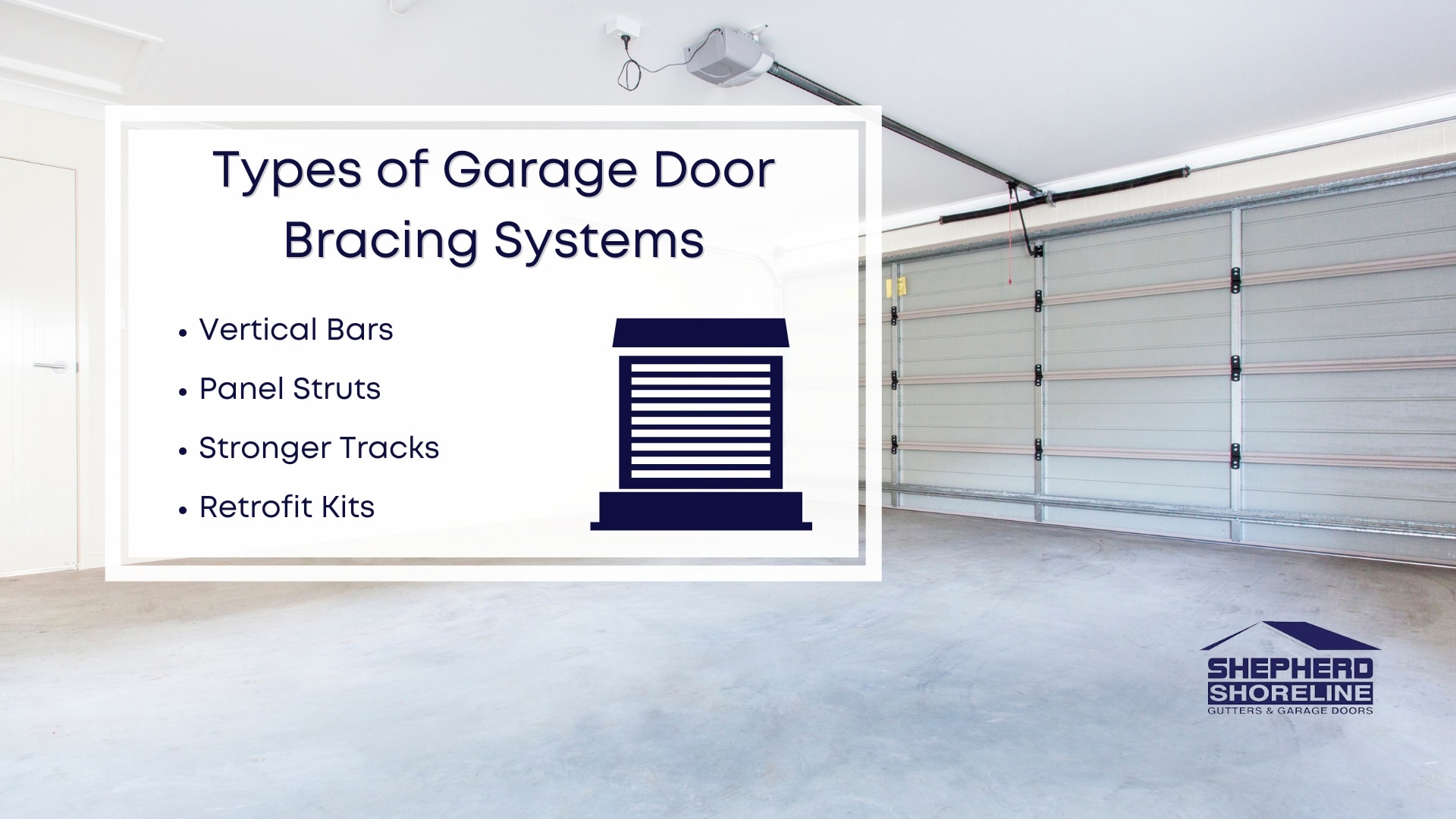
Vertical Bars
Vertical reinforcement bars run from top to bottom along the inside of the garage door and support the panels during high-pressure wind events. Their main purpose is to reduce flexing across the height of the door so the structure can better resist inward and outward forces. The added support is especially useful on larger doors, where pressure can build quickly across a wide surface.
Panel Struts
Horizontal struts are installed across the width of the garage door panels to add strength where the door might otherwise bow under stress. These supports help spread wind force more evenly from one side of the door to the other, which reduces strain on individual sections. Horizontal reinforcement is often used together with vertical bars for a more complete support system.
Stronger Tracks
A reinforced track system helps the entire garage door stay aligned when wind pressure pushes against it. Even if the panels are strong, the system can still fail if the tracks pull away, bend, or shift under stress. Stronger track systems use heavier materials, better mounting support, and more secure attachment points to keep the door in place.
Retrofit Kits
Retrofit kits are designed for homeowners who want to strengthen an existing garage door without replacing the entire system. These kits can include braces, bars, brackets, and added hardware that improve the door’s wind resistance. Such kits are often a practical option when a garage door is still in usable condition but does not meet current expectations for storm protection.
Strengthening Your Garage Door for Long-Term Protection
The best way to protect your home is to find out whether your current garage door can handle the wind load demands in your area. A professional inspection can help determine if your door meets current standards or if added garage door bracing is needed to improve safety and performance. Taking action early can help you avoid expensive repairs and reduce the risk of major damage during severe weather.
If you are unsure where your garage door stands, Shepherd Shoreline is here to provide trusted garage door solutions tailored to your needs. Our seasoned Fruitport garage door repair technicians can inspect your current system, explain your reinforcement options, and install proper bracing to help keep your door secure and code-compliant. Contact us today at (231) 780-2847 or here to schedule your inspection.