
Have you experienced that moment when you press your garage door remote and hear the opener motor running, yet the door stays exactly where it is? The opener might make its usual operating noise, but the door doesn’t move at all. That can be frustrating, especially when you need to leave for work or secure your garage at night. Moreover, it raises an important question: Is the opener broken, or is another part of the system preventing the door from moving? Let’s explore why an opener might run without lifting the garage door, the mechanical failures that might be responsible, and how to restore safe operation.
- Why a Garage Door Opener Can Run Without Moving the Door
- Common Mechanical Problems That Prevent Door Movement
- Warning Signs That Help Identify the Problem
- Restoring Safe and Reliable Garage Door Operation
Why a Garage Door Opener Can Run Without Moving the Door
A garage door opener does more than power a motor. When you press the control, the motor turns gears that operate a chain, belt, or threaded screw, depending on the opener. That mechanism moves a trolley along the opener rail. The trolley connects to the door through a metal arm, allowing the opener to guide the door upward or downward. Garage door springs help balance the door weight, so the opener does not have to lift the full weight on its own. Each part must work together for the door to move properly.
If you hear the garage door motor run, but the door doesn’t move, the problem might be inside the opener, along the rail, or in the hardware itself. For instance, if the gears no longer turn the drive mechanism, or the trolley is not connected to the door, the motor might run without any door movement. A broken spring, damaged cable, locked door, or obstructed track can further prevent the door from moving even when the motor and drive are working fine. It’s essential to identify the source before making garage door repairs or replacing the opener.
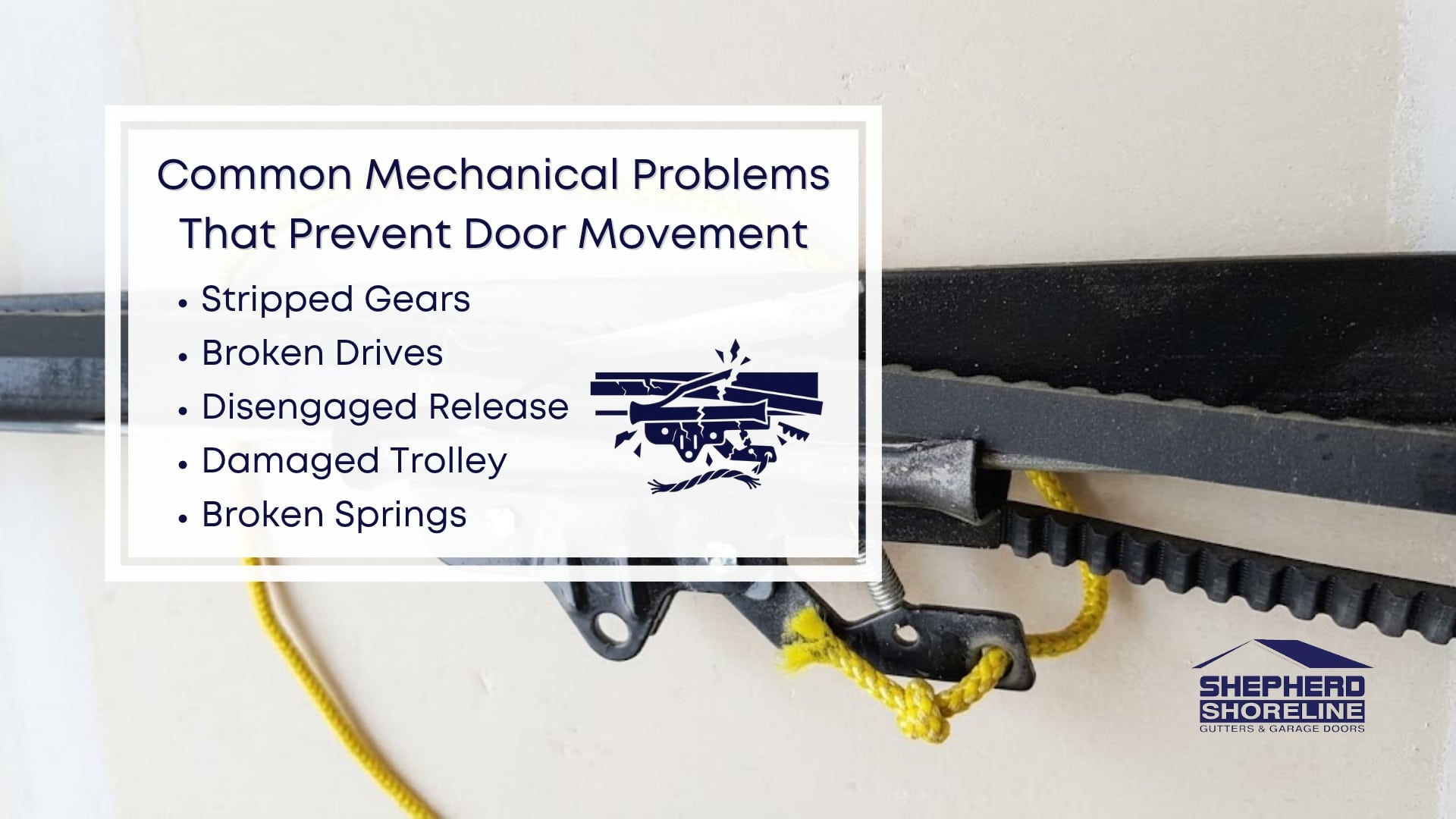
Common Mechanical Problems That Prevent Door Movement
Several mechanical problems can interrupt the connection between your opener and garage door. Some develop gradually, while others happen suddenly.
Stripped Gears
Many Muskegon garage door openers use internal gears to transfer power from the motor to the drive sprocket or other moving parts. Over time, gear teeth can wear down or break, particularly if the opener has been working against excessive resistance. When the teeth no longer engage properly, the motor might spin while the chain or belt stays still, and you might hear grinding or see plastic shavings near the opener housing. Replacing the gear might help, but the actual cause must be investigated. An unbalanced garage door or failing spring might quickly damage any replacement.
Broken Drives
Chain-drive and belt-drive openers depend on an intact connection between the motor and the trolley. If a chain breaks or becomes extremely loose, the trolley might stop moving even though the motor continues running. A belt, on the other hand, can lose its grip or separate from its connection. These failures sometimes follow a period of rattling or irregular door movement. Don’t reach into the rail or adjust tensioned parts, especially with the opener powered. Let a qualified Muskegon garage door repair technician inspect the entire drive assembly and determine the components that need repair or replacement.
Disengaged Release
Modern garage door openers often have an emergency release feature that allows the trolley to disconnect from the drive so the door can be operated manually when necessary. Someone might have pulled the release during a power outage and forgotten to reconnect it. In that case, the opener might run, and its drive might move without pulling the garage door. Reconnection procedures vary by model, so make sure to follow the manufacturer instructions. Never pull the release on an open or partially open door that might have a broken spring, because the garage door might suddenly fall.
Damaged Trolley
The trolley travels along the opener rail and transfers movement to the arm connected to the door. Its internal parts can wear out or lose their grip on the drive mechanism. Depending on the design, the drive might move while the trolley remains in place, or the trolley might travel without lifting the door because the connection to the arm is damaged. These problems can resemble a disconnected emergency release. A Muskegon garage door repair expert can examine the trolley, its attachment points, and the door arm to identify the issue and prevent unnecessary replacement of working parts.
Broken Springs
Garage door springs carry much of the load that makes a heavy door manageable. If a torsion spring or an extension spring breaks, the door might become too heavy for the opener to lift, and you might hear a loud bang or notice a visible gap in the torsion spring. A loose cable or bent track can create similar resistance. In some situations, the opener strains briefly and stops, and continued attempts can damage the gears or motor. These components can be dangerous because springs and cables are under high tension. Don’t attempt any DIY repairs or force the garage door open on your own.
Warning Signs That Help Identify the Problem
Pay attention to what moves, what stays still, and whether the system makes unusual noises. These observations can help a technician narrow down the cause.
Stationary Drive
If you hear the motor running but the chain or belt does not move, the problem might lie between the motor and the drive mechanism. Worn gears or a damaged connection might prevent power from reaching the chain or belt. From a safe position, observe whether the drive moves when the opener is activated once. A stationary drive does not always identify one specific failed part, but it can help a technician focus the inspection.
Unusual Sounds
Grinding, clicking, scraping, and rattling can indicate that parts inside the opener are slipping or no longer engaging. A grinding noise near the opener housing might point to damaged gears, while repeated clicking might suggest trouble with a trolley connection. Avoid running the opener just to reproduce the noise, since continued operation can turn a relatively small mechanical issue into more costly repair.
Moving Trolley
If the trolley travels along the rail while the garage door stays in place, the connection between the moving carriage and the door might have been lost. The emergency release might be disengaged, or the door arm might have been disconnected. Don’t stand beneath a partially open door or try to reconnect parts while the opener is operating, especially when you have not ruled out a garage door spring or cable problem.
Stuck Door
A garage door that remains stuck after you activate the opener might involve a mechanical failure. A broken spring can leave it too heavy to lift, while a misaligned track or damaged roller might restrict its travel. Repeated attempts can place additional stress on other components. If the door starts to move unevenly or stops short, don’t force it open or use the emergency release until you know it can remain safely supported.
Restoring Safe and Reliable Garage Door Operation
If your garage door motor runs, but the door doesn’t move, avoid attempts to force a response. Repeated activation won’t reconnect a broken drive or restore a failed spring, and it might even damage other components. Shepherd Shoreline understands how disruptive an unresponsive garage door can be. Our competent Muskegon garage door repair professionals can assess opener drive failures, inspect related door components, and recommend repairs or replacement based on the condition of your system. Contact us today at (231) 780-2847 or here to schedule an inspection. Let us help you restore safe, reliable access to your garage.