
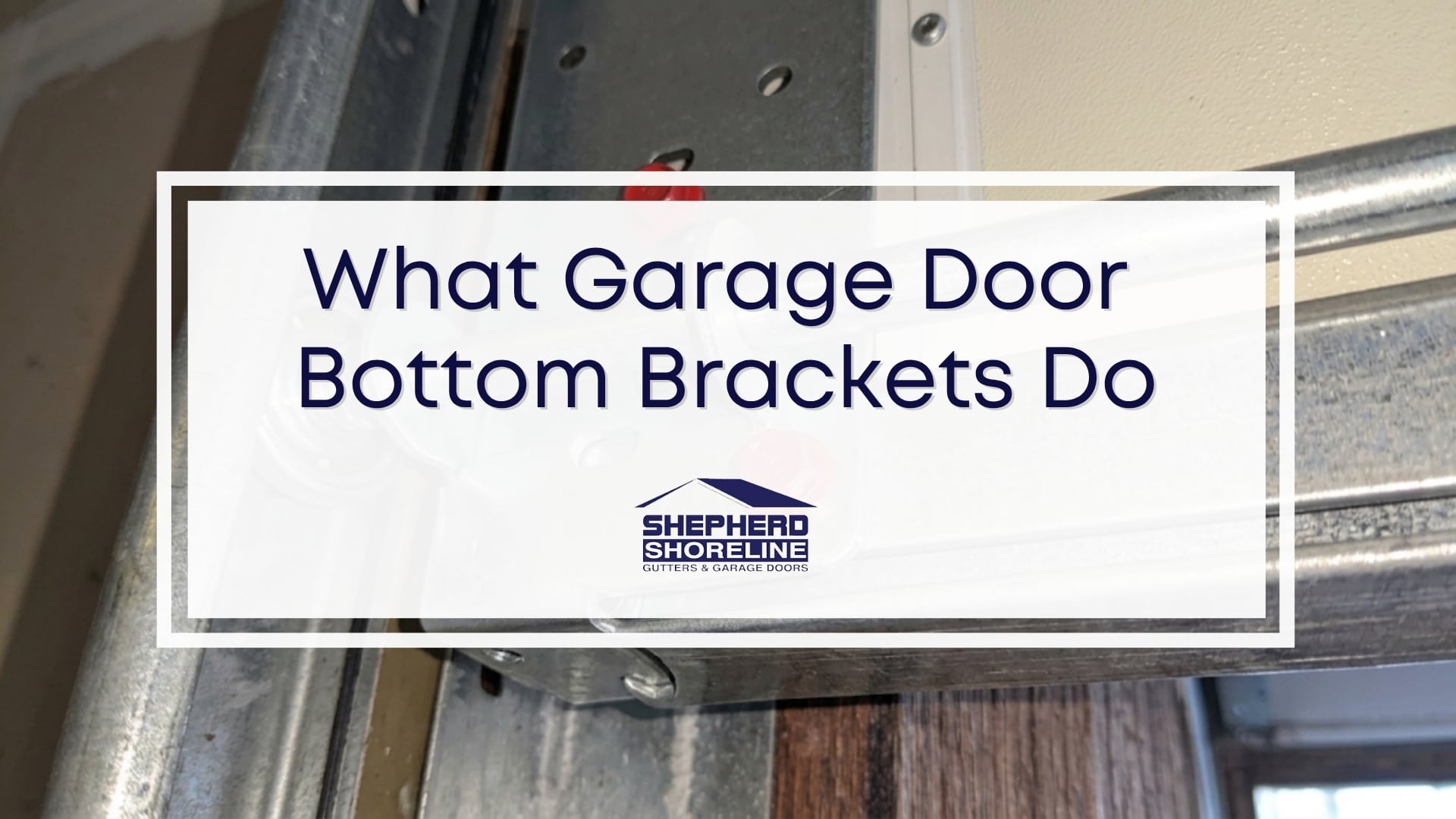
A garage door is made up of many parts that work together every time you open or close it. Some components are easy to notice, while others are small enough that you might not give them much thought until something goes wrong. Garage door bottom brackets, located near the lower corners of the door, fall into the second category. These brackets might appear as ordinary pieces of metal hardware, but their role in garage door lifting systems is critical. Let’s explore what the bottom brackets do, why these components can be dangerous to handle, and the warning signs that might indicate you need professional garage door repair.
- What Garage Door Bottom Brackets Do
- Why Bottom Brackets Are More Dangerous Than Regular Hardware
- Common Signs of Bottom Bracket Problems
- Repairing Bottom Bracket Problems Safely
What Garage Door Bottom Brackets Do
Garage door bottom brackets are mounted near the lower corners of the bottom section of your garage door. Their main job is to provide an attachment point for the lift cables that help raise and lower the door. On many garage door systems, a cable runs from each bottom bracket upward to a cable drum or another part of the lifting system. When the garage door springs provide force, the cables pull on these brackets and help lift the weight of the door. That way, the bottom brackets transfer energy from the spring system into the controlled lifting movement you see when the door opens.
Although each bracket is relatively small, it can carry a considerable mechanical load. Garage doors in Muskegon, MI, can weigh hundreds of pounds depending on their size, construction, insulation, and materials. Garage door bottom brackets keep the lift cables properly connected so both sides of the door rise at approximately the same rate. If a bracket bends, breaks, comes loose, or separates from the door, the cable connection might no longer function as intended, and that can affect the balance of the entire system, causing the garage door to move unevenly or become difficult to operate.
Why Bottom Brackets Are More Dangerous Than Regular Hardware
A bottom bracket can look similar to other metal brackets attached to the garage door, but the force acting on it makes a significant difference. Depending on the design of the garage door system and its position, the lift cables connected to the brackets might carry substantial tension. That tension is related to the spring system that offsets the weight of the garage door. If you loosen or remove a bracket while the cable is still loaded, the components might snap, whip, or shift with enough force to cause serious injury.
That’s what makes bottom brackets far more dangerous to handle than other garage door hardware. Standard household tools might allow you to remove the bolts, but having the ability to loosen a fastener does not mean it’s safe to do so. Trying to work on a tension-loaded part with basic DIY repairs can create unnecessary risk and might even cause additional damage to the door. It’s often best to have the system inspected by garage door experts who use proper procedures and equipment to address damaged components.
Common Signs of Bottom Bracket Problems
Garage door bottom bracket problems are not always obvious at first. Some develop gradually. Paying attention to changes near the lower corners of your garage door and the way the door moves can help you identify a developing issue before the damage becomes worse.
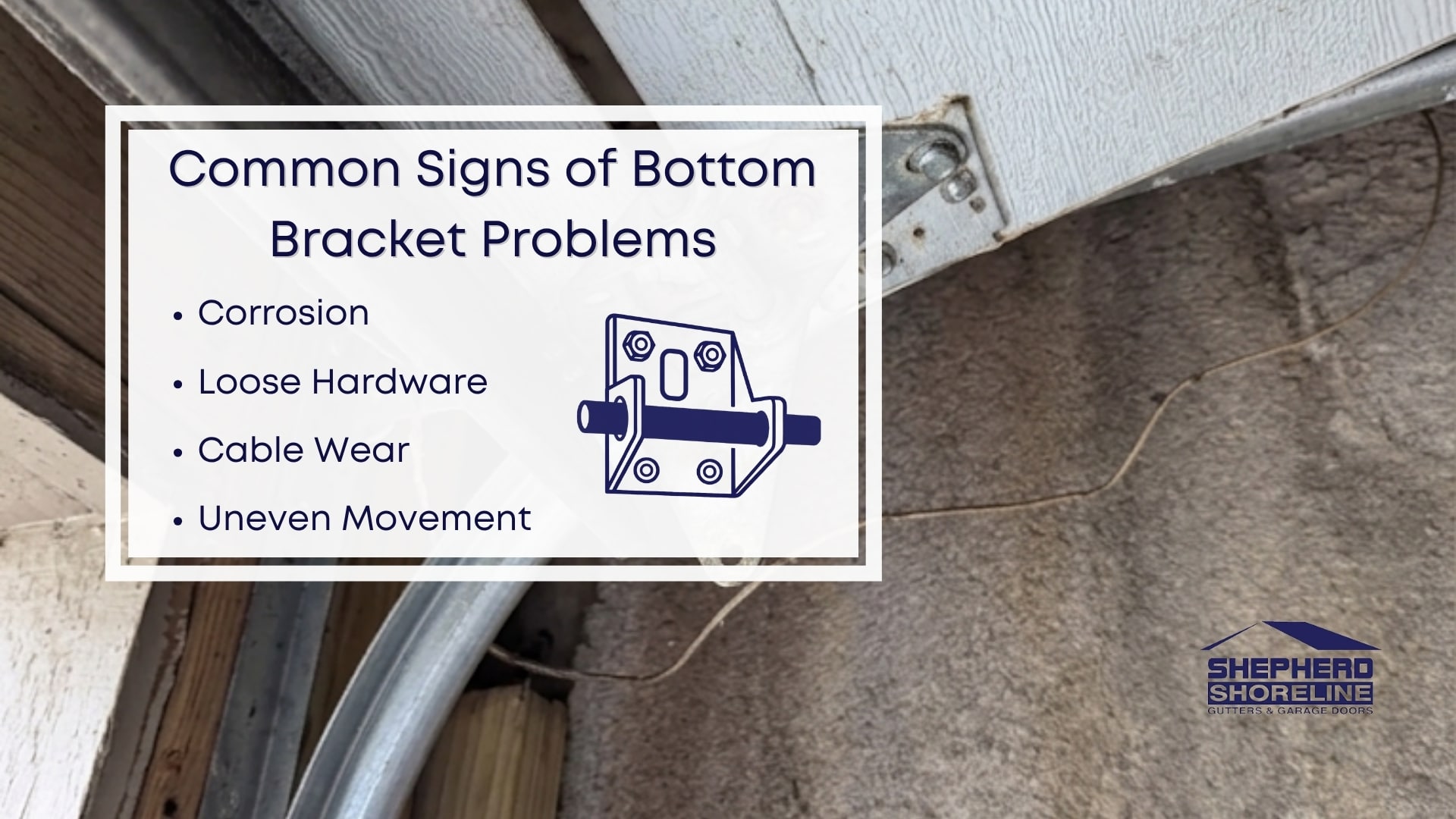
Corrosion
Because bottom brackets sit close to the garage floor, these components are frequently exposed to weather elements. Over time, that exposure might cause corrosion that weakens the metal or the area around its mounting points. Surface discoloration does not always mean a bracket is failing, but extensive rust, cracks, bent edges, or other visible changes can indicate deterioration that deserves closer attention.
Loose Hardware
Repeated movement and garage door shaking during normal operation can gradually affect hardware. If you notice gaps forming between the garage door bottom bracket and the panel, or the bracket shifting from its normal position, something might be wrong with the mounting point. The issue might involve loose hardware, worn attachment points, or damage to the garage door section itself.
Cable Wear
Look out for frayed wires, broken strands, corrosion, or a loose cable that no longer follows its normal path. These conditions might indicate cable wear or improper tension. Since the cables work together with the garage door springs and bottom brackets, damage to one component can affect the others. Do not pull, cut, or attempt to reposition a questionable cable yourself, even if it appears loose.
Uneven Movement
Watch the bottom edge of the door as it opens and closes. If one side rises ahead of the other, or the door appears tilted, the lifting system might no longer be operating evenly. Uneven movement can result from several problems, including a compromised bottom bracket. Continuing to operate the door can place additional strain on other components, so stop using it until the system can be inspected.
Repairing Bottom Bracket Problems Safely
If you notice corrosion, loose hardware, frayed cables, uneven door movement, or other concerns around the bottom corners of your garage door in Muskegon, MI, do not attempt to remove the bracket or cable yourself. Let Shepherd Shoreline evaluate the entire lifting system to determine what needs attention and recommend the appropriate repair solution. Our experienced garage door technicians understand how the interconnected garage door components operate and have the tools and training needed to work around them safely. Contact us today at (231) 780-2847 or here to schedule an inspection.