
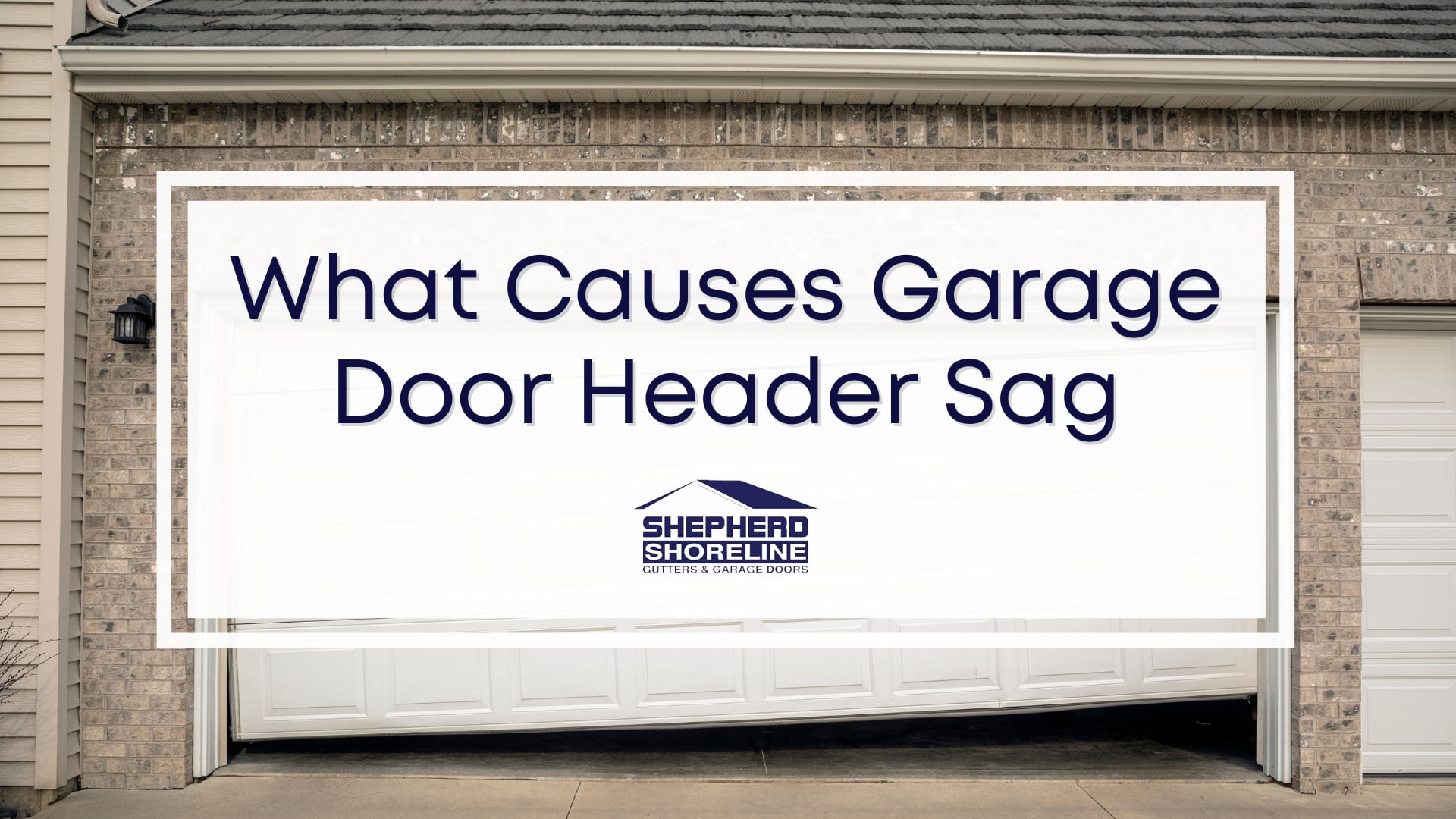
The garage door header helps carry the weight of the door from the wall or any living space above it. When the header starts to sag, it can create serious problems. A sagging garage door header can affect how the tracks line up, how the opener works, and how much stress is placed on the springs, rollers, and panels. In some cases, what seems to be a simple garage door header sag might point to a deeper structural problem. That’s why it’s important to know the signs of header issues so you can take action before the damage becomes more expensive.
- What Garage Door Header Sag Means
- Common Causes of Garage Door Header Sag
- Warning Signs Homeowners Should Watch For
- Protecting Your Garage Door and Home Structure
Let’s explore what garage door header sag means, what causes it, and the warning signs homeowners should watch out for.
What Garage Door Header Sag Means
The garage door header is the horizontal structural support located above the garage door opening. Its job is to carry the weight from the wall or any living space above the garage and transfer that weight to the surrounding framing. Because garage doors often require wide openings, the header must be strong enough to span that space without bending. When the header is properly sized and supported, it keeps the opening stable and allows your garage door system to operate smoothly.
Sagging occurs when the header begins to bend, settle, or lose support. Large garage openings are especially vulnerable because of less vertical support in the middle of the wall. A single-car garage door already creates a wide gap in the structure, while a double-car door creates an even larger span. Any movement in the header can affect the full garage door system. The tracks, for instance, might shift out of alignment, or the opener might work harder than it should.
Common Causes of Garage Door Header Sag
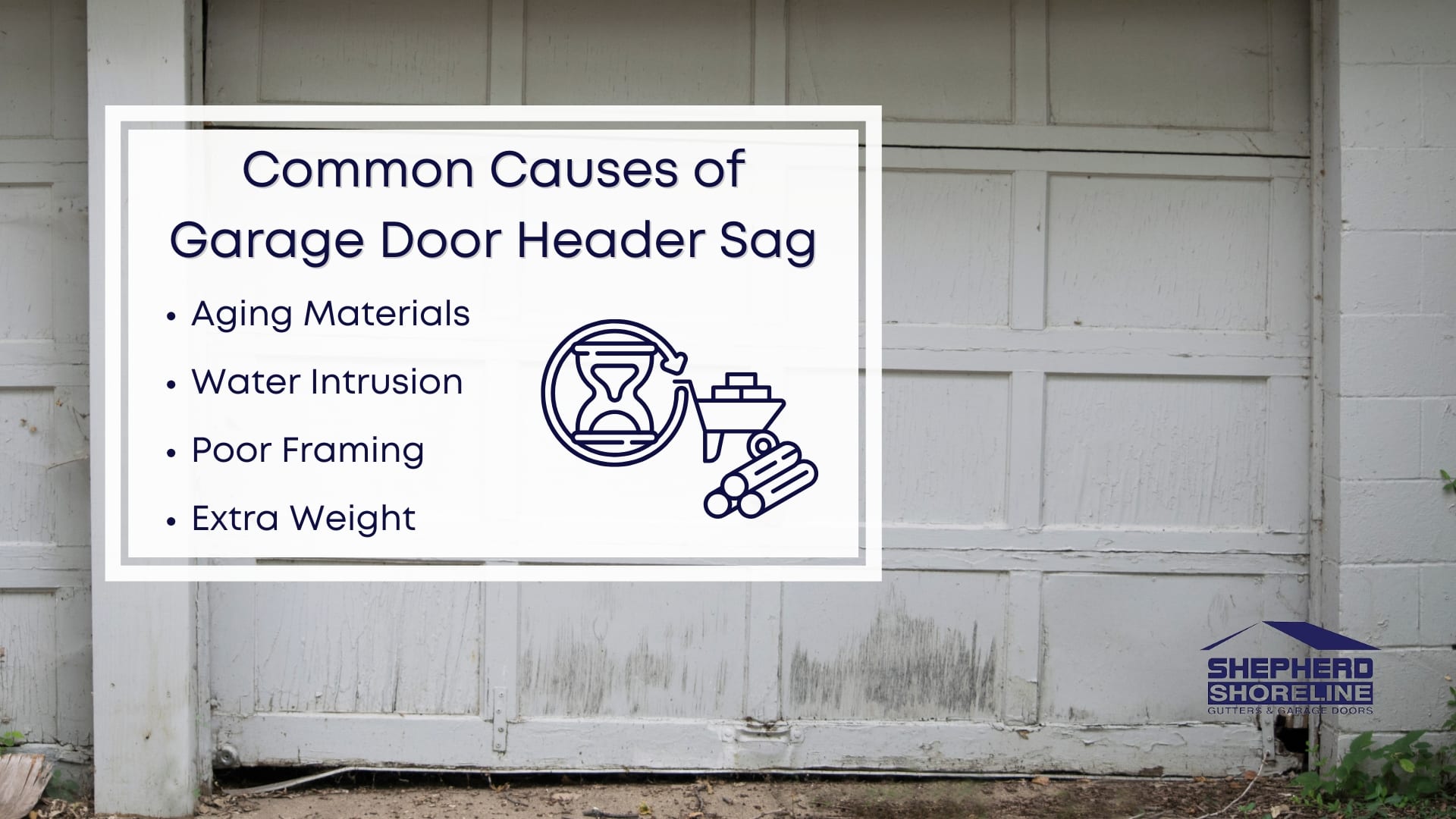
Garage door header sag can develop for several reasons. Sometimes, it happens slowly as a home ages. Other times, the problem comes from moisture, poor construction, or too much weight above the garage.
Aging Materials
Wood naturally changes as it ages. Over many years, it can dry out, shrink, crack, or weaken, especially if it has been exposed to seasonal temperature changes. Even if it was strong when installed, long-term stress can slowly cause it to bow or settle. As the wood weakens, the garage door opening might no longer stay square, and you might notice the top of the door looking uneven or one side of the door sitting slightly lower than the other.
Water Intrusion
If rain, melting snow, or gutter runoff finds its way around the garage opening, moisture can enter the header area, and that might lead to rot, swelling, soft wood, or hidden structural damage. It’s common in areas that deal with wet seasons, snow, and freeze-thaw cycles. Once moisture gets behind trim or siding, the damage might not be visible right away. By the time you notice the sagging, the garage door header might already have lost some of its strength.
Poor Framing
Sometimes the issue starts with how the garage was built or modified. If the header is undersized or poorly supported, it might not be strong enough to support the weight above it. A header that is too small might slowly bend under pressure, while poor framing can cause the load to transfer unevenly, putting more stress on one side of the opening. When that happens, the garage door might not sit evenly in the frame, and repeated use can make the problem worse.
Extra Weight
The more weight above the garage opening, the more stress the header must carry. A garage with a living space above it, heavy roofing materials, storage loads, or a large exterior wall might place added pressure on the header. If the structure was not designed to handle that load, sagging can develop over time. Since the issue might involve more than the door itself, it’s best to have a Muskegon garage door repair professional inspect the area to ensure safety.
Warning Signs Homeowners Should Watch For
Header sag can be easy to miss in the early stages because the changes might happen slowly, and you might think the door simply needs adjustment, lubrication, or a minor DIY repair. However, when the structure above the opening starts to move, the garage door system often shows signs of stress.
Uneven Movement
If you hear scraping sounds as the garage door travels along the tracks or notice one side lifting faster than the other, it’s often a sign of a sagging garage door header. In some cases, the door might hesitate at a certain point before moving again. These happen when the opening is no longer square. As the header settles or bends, it can slightly change the shape of the frame around the door.
Gaps
Gaps around the top of the garage door might indicate header movement. Perhaps, you might see daylight coming through the upper edge of the door, or you might notice that the weatherstripping seal no longer touches evenly across the opening. One side might appear tighter while the other side has a visible space. These gaps can allow cold air, rain, pests, and debris to enter your garage.
Wall Cracks
Cracks near the garage door, particularly at the upper corners of the opening, might occur if the weight above the door is no longer being carried evenly. When the header bends or settles, the surrounding materials might move with it. While some minor cracks can come from normal settling, cracks paired with garage door movement issues might point to a more serious structural concern.
Track Problems
Garage door tracks must stay straight and properly secured for the door to move safely. When the header sag changes the shape of the opening, the tracks might start pulling out of alignment, and you might see loose brackets, bent track sections, or rollers that bind as the door moves. In such a case, you might need to repair sagging garage door header issues rather than just replace the door hardware.
Protecting Your Garage Door and Home Structure
Don’t wait until a sagging garage door header becomes unsafe or the door itself stops working completely. Let Shepherd Shoreline help you restore safe, reliable garage door operation and protect your home from further damage. Our seasoned Muskegon garage door repair professionals can examine your door system, determine what might be causing the problem, and recommend the right solution. Contact us today at (231) 780-2847 or here to schedule an inspection.