
A noisy garage door is easy to brush off. Sometimes, you hear a squeak, a rattle, or a sudden pop, and you assume the fix is simple: add lubricant and move on. In many cases, that’s true. But other times, that sound is your door’s way of telling you something more serious is happening, particularly structural stress that’s building up every time the door opens and closes.
- Common Garage Door Noises and What They Usually Mean
- Structural Causes of Garage Door Noise
- How Professionals Diagnose Structural Garage Door Issues
- Schedule Garage Door Service With Shepherd Shoreline
If you’re dealing with unusual garage door noises, it helps to know when you’re hearing a normal maintenance issue or a warning that the system is under extra strain. That distinction matters because even though lubrication can quiet some friction, it can’t fix a door that’s misaligned or improperly balanced. Let’s explore how to distinguish between minor noise and structural stress.
Common Garage Door Noises and What They Usually Mean
Most garage doors make some sound. A little rolling noise is normal. A soft hum from the garage door opener can be normal. The key is whether the sound is consistent, mild, and unchanged, or whether it’s getting louder, happening more often, or paired with jerky movement. Here are common noises you might hear:
- Squeaking
Squeaking is often the “go-to” noise people associate with lubrication. And yes, sometimes it really is that simple. Dry rollers, hinges, or bearings can squeak when general maintenance is needed. However, if the squeak comes with visible shaking, uneven movement, or rubbing marks on the track, that’s a sign the issue might be alignment or stress, not dryness.
- Rattling
Rattling can happen when bolts or brackets loosen over time. Garage doors vibrate during operation, and that vibration can slowly loosen hardware. Tightening fasteners might reduce the noise, but if rattling continues, it can mean parts are shifting under uneven load, and your door is stressing the hardware in one area more than another.
- Grinding
A grinding sound often means metal-on-metal contact. Common causes include worn rollers, damaged bearings, or track issues. If your door grinds, lubrication might reduce the noise for a short time, but it only masks the symptom instead of solving the cause. For a long-term solution, it’s best to seek out professional garage door repair in Coopersville.
- Popping
Popping or loud snapping sounds are usually signs of a serious garage door mechanical failure. These can indicate tension problems with springs or sudden shifts in structural components. If you hear a sharp bang, especially during operation, stop using the door and have it inspected by an experienced garage door technician right away.
The difference between minor noise and mechanical stress usually comes down to performance. If your door still opens evenly and smoothly, and the noise improves with maintenance, it’s probably minor. But if the door jerks, moves unevenly, or looks crooked while operating, the noise might be tied to structural issues.
Structural Causes of Garage Door Noise
When noise is tied to structural stress, the door is working under uneven pressure. That pressure can come from imbalance, misalignment, or movement in the surrounding structure. Here are the most common stress-related causes that go beyond simple maintenance:
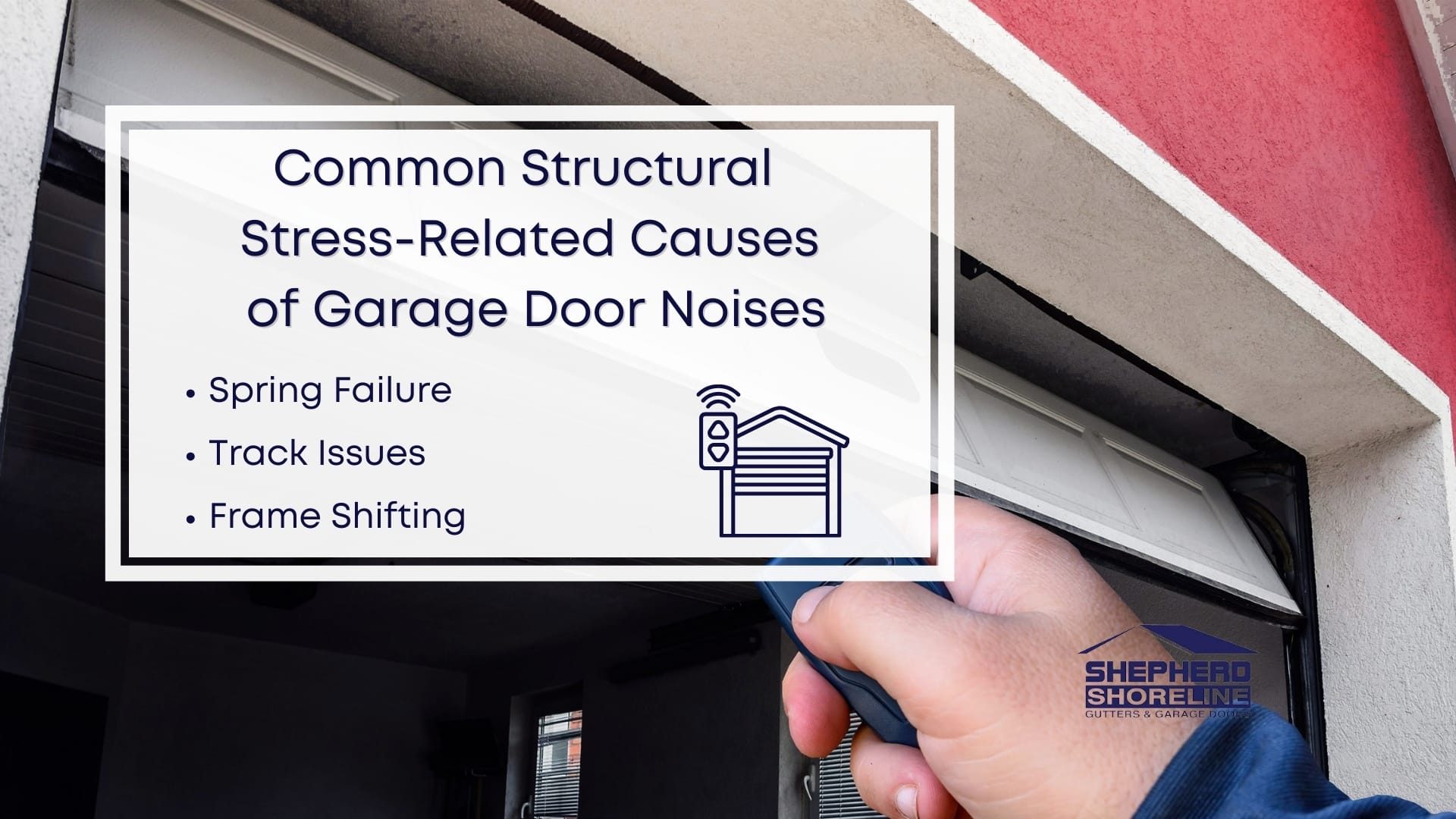
Spring Failure
Garage door springs carry most of the door’s weight. When springs wear out, weaken, or fail unevenly, the door becomes unbalanced. That imbalance creates stress in multiple places at once. An unbalanced door puts extra load on rollers, hinges, tracks, and the opener. Parts that used to glide now fight resistance. That stress shows up as grinding, rattling, or popping sounds that come from forced movement. Because springs are under high tension, DIY repairs are definitely not recommended.
Track Issues
Garage door tracks guide the door as it moves up and down. If tracks become bent, loose, or misaligned, the door no longer moves evenly. When that happens, you might hear grinding or scraping sounds. The rollers might drag along one side, and the door might shake or vibrate during operation. In some cases, one side of the door rises slightly ahead of the other. Lubricating the tracks won’t fix alignment. The tracks must be adjusted and secured correctly.
Frame Shifting
A garage door system is attached to the structure of your home. In Michigan, the freeze-thaw cycle can cause materials to expand and contract. These movements might slightly alter the shape of the garage opening. When the frame shifts, the door can start to twist slightly during travel. That twist creates binding, leading to popping sounds and added strain on hinges and track mounts. In some cases, you can hear creaking as the frame area takes on load and releases it.
How Professionals Diagnose Structural Garage Door Issues
If basic lubrication doesn’t solve the problem, professionals can take a deeper look. Structural issues require a careful and systematic inspection. Instead of guessing, trained technicians use a step-by-step process to pinpoint the source before recommending garage door repairs.
Balance Check
A technician can safely assess whether the door stays in place when partially opened and whether it rises evenly, without drifting or slamming. If it won’t hold position, that’s a sign the springs aren’t carrying the door’s weight properly. Spring tension is then evaluated to see if the springs are worn, mismatched, or nearing the end of their service life.
Track Inspection
Tracks are checked for bends, gaps, loose fasteners, and signs of rollers rubbing or riding unevenly. Even small alignment issues can cause grinding, scraping, or rattling because the door isn’t moving through a smooth path. Technicians further inspect hinges, brackets, and mounting points for movement or wear.
Load Assessment
Professionals look for load transfer issues, basically, where the weight and force are going during operation. A stressed system shifts load to the wrong places, such as the opener arm, one side of the track, or a single cable. That’s when you get recurring garage door noise, uneven lifting, or a door that shudders or jerks at the same point every time.
Schedule Garage Door Service With Shepherd Shoreline
Shepherd Shoreline understands how Michigan weather, daily use, and aging components affect your garage door system. If you need reliable garage door repair in Coopersville, our technicians are ready to help. We handle spring issues, track misalignment, hardware adjustments, and full system evaluations. Our goal is simple: restore safe, smooth, and quiet operation so you can trust your garage door every time you use it. Contact us today at (231) 780-2847 or here to schedule your inspection.