
Michigan winters can be tough on your home, especially on your roof and gutters. Heavy snowfall, fluctuating temperatures, and freezing rain can often lead to two common problems: ice dams and clogged gutters. While these issues might seem similar, their causes and effects are not the same. Let’s explore how ice dams form in gutters, what causes clogged gutters, and what you can do to prevent winter damage before it becomes an expensive repair.
- What Are Ice Dams and How Do They Form?
- What Causes Clogged Gutters?
- Key Differences Between Ice Dams and Clogged Gutters
- Preventing Winter Water Damage
- Protect Your Home This Winter with Shepherd Shoreline
What Are Ice Dams and How Do They Form?
Ice dams form when heat from inside your home escapes through the roof, warming the shingles and melting the layer of snow sitting on top. As the water runs down toward the colder eaves, where the roof overhangs and has less access to interior heat, it refreezes. Over time, that process creates a thick ridge of ice along the roof edge.
The buildup of ice acts like a wall. When more snow melts, the trapped water can’t drain off the roof properly. Instead, the water pools behind the ice dam, eventually working its way under the shingles. Once that happens, you’re at risk for roof leaks, soggy insulation, water stains on your interior walls, and even mold growth.
What Causes Clogged Gutters?
Clogged gutters, on the other hand, are usually caused by debris buildup. During fall, leaves, twigs, and pine needles collect in your gutter system. When winter arrives, the debris mixes with snow and ice, forming stubborn blockages that stop water from flowing freely through your downspouts.
As the temperature rises and falls throughout the day, the snow in your gutters melts and refreezes. The constant freeze-thaw cycle can cause the trapped ice to expand, putting pressure on your gutters and fasteners. If ignored, it can lead to gutter sagging, cracking, or even complete detachment.
Moreover, when melting snow from the roof can’t drain through a blocked gutter, the trapped water refreezes, effectively feeding the growth of an ice dam. It’s a vicious cycle: your clogged gutter contributes to the ice dam formation, and the ice dam, in turn, adds more weight and strain to your gutter system.
Key Differences Between Ice Dams and Clogged Gutters
An ice dam has nothing to do with debris inside your gutters, and you can have perfectly clear gutters yet still experience an ice dam if your attic isn’t properly sealed and ventilated. A clogged gutter, on the other hand, comes down to maintenance. Unlike ice dams, you can usually prevent clogged gutters with seasonal cleaning and protective covers.
Knowing how to identify each issue can help you choose the right solution and prevent long-term damage to your home. Treating a clogged gutter won’t fix an ice dam caused by attic heat loss, and removing an ice dam won’t solve your drainage problems if your gutters are packed with debris. To avoid confusion, inspect both your roof and your gutters carefully.
Ice dams are easy to spot because of the large icicles hanging from your roof and the thick line of ice forming along the eaves. Indoors, you might notice water stains or peeling paint near the ceiling. Clogged gutters tend to show up as overflowing water, sagging sections, or blockages you can physically see. Misdiagnosis can lead to wasted time and money.
Preventing Winter Water Damage
Water damage is usually the result of a combination of roof issues and gutter problems. Fortunately, with the right upkeep and preventive steps, you can protect your home through even the harshest Michigan winters.
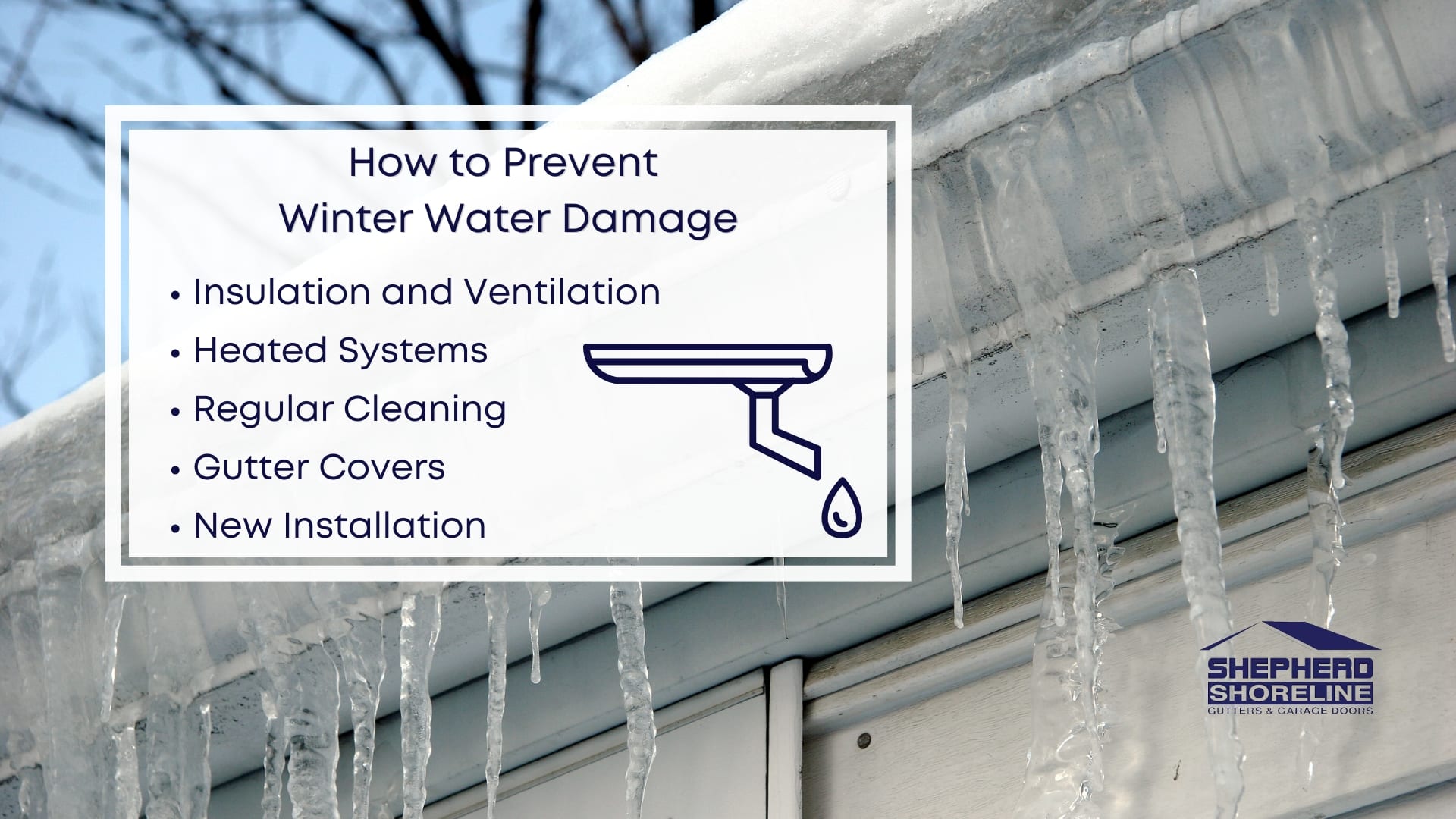
Insulation and Ventilation
Proper attic insulation keeps warm air from escaping through the roof, reducing the risk of snow melt and ice dam formation. At the same time, ventilation helps regulate attic temperature and moisture levels, preventing heat from becoming trapped.
Heated Systems
Consider a heated gutter system, especially if you live near Lake Michigan, where freeze-thaw conditions are common. Heated cables or gutter heaters help prevent water from freezing in your gutters and downspouts, keeping the flow consistent.
Regular Cleaning
Keeping your gutters clear ensures proper water drainage year-round and prevents snowmelt from backing up and freezing. The best times to clean your gutters are in late fall, after most of the leaves have dropped, and during spring, before the rainy season begins.
Gutter Covers
Gutter guards or screens help keep leaves, twigs, and other debris out of your gutter system. While not entirely maintenance-free, these covers greatly reduce how often you need to clean your gutters, as well as the risk of a clogged gutter forming during or after a storm.
New Installation
If you notice sagging sections, rust, cracks, or constant leaks, it might be more cost-effective to upgrade to a new Grand Haven gutter system. Aluminum or steel gutters are durable, rust-resistant, and designed to withstand repeated freeze-thaw cycles.
Protect Your Home This Winter with Shepherd Shoreline
Shepherd Shoreline is here to make sure your home is ready for the toughest Michigan winter conditions. We offer durable, efficient Grand Haven gutter systems that handle heavy snowfall and help reduce the risk of ice dam gutter problems. For homeowners who already have a solid setup but struggle with debris buildup, our team can provide cleaning and maintenance services to ensure your gutters stay clear and functional throughout winter. Contact us today at (231) 780-2847 or here to schedule a consultation.