
When you think about your gutter system, you probably focus on the gutters themselves. But the small parts holding everything together matter just as much. Gutter fasteners are what keep your gutters secure, aligned, and able to handle water moving off your roof. When these components are installed incorrectly or the wrong type is used, problems can slowly build up where you can’t always see them. Let’s explore how gutter fasteners work, why such parts matter, and how common installation mistakes lead to long-term fascia and roof damage.
- The Role Gutter Fasteners Play in Gutter Systems
- Common Gutter Fastener Installation Mistakes
- How Fastener Failure Leads to Fascia and Roof Damage
- Warning Signs of Gutter Fastener Problems
- Schedule Professional Gutter Service with Shepherd Shoreline
The Role Gutter Fasteners Play in Gutter Systems
Gutter fasteners are the hardware that attaches your gutters to the fascia board along the edge of your roof. Their main job is simple: keep the gutters firmly in place. But to do that well, the right type of fastener has to be chosen and installed correctly. There are several types of gutter fasteners used in residential gutter systems, including:
- Spikes
Gutter spikes are long metal nails, often used with a sleeve called a ferrule. These fasteners run through the gutter and into the fascia. While inexpensive, spikes can loosen over time as wood expands and contracts.
- Hangers
Hidden hangers hook onto the inside of the gutter and are screwed directly into the fascia. Such fasteners provide strong, even support and are commonly used in Muskegon seamless gutter systems.
- Brackets
Brackets are external supports that cradle the gutter from underneath or the front edge. These add support along the gutter run and are often paired with hangers in areas that need extra strength.
- Screws
Screws are typically used with many hanger systems or brackets. Such components provide a tighter hold than spikes and are less likely to back out over time, especially when installed into solid fascia material.
Michigan weather is tough on gutter systems. The freeze-thaw cycle during winter causes fascia boards to expand and contract repeatedly. If not anchored securely, fasteners loosen with each cycle. During spring and fall, debris buildup adds even more weight. That’s why proper fastening isn’t optional, but essential.
Common Gutter Fastener Installation Mistakes
Many gutter problems don’t come from bad gutter materials, but from small installation errors that slowly get worse over time. These mistakes often go unnoticed until visible damage appears. Here are some of the most common fastener-related issues homeowners run into:
Fasteners Spaced Too Far Apart
When hangers or spikes are placed too far apart, the gutter lacks the support needed to handle weight. As water and debris collect, the gutter begins to bow between attachment points. Over time, that sagging pulls on the fascia board, loosens fasteners even more, and allows water to spill behind the gutter. Once water reaches the fascia, wood rot can start quickly, especially when moisture is trapped and has nowhere to dry out.
Using the Wrong Fasteners
Not all fascia boards are the same. Wood, composite, and wrapped aluminum fascia all require different fastening approaches. Using fasteners that are too short or not designed for the material can lead to weak connections. Short screws might not reach solid backing, while incorrect threading can strip the fascia material. In such cases, fasteners might look secure at first but slowly loosen as the gutter system is stressed.
Improper Fastener Penetration
In other cases, screws or spikes penetrate roofing materials or flashing instead of solid fascia. That creates direct pathways for water to enter the roof system. Moisture can then travel under shingles or behind flashing, leading to roof edge rot, mold, and structural damage. Moreover, improper penetration might compromise the flashing, which is designed to direct water away from vulnerable roof edges, causing hidden water intrusion.
How Fastener Failure Leads to Fascia and Roof Damage
When gutter fasteners fail, the first problem usually starts behind the scenes. As gutters loosen or pull away, water no longer flows cleanly into the trough and down the downspout. Instead, it slips behind the gutter and runs directly onto the fascia boards. Wood fascia absorbs this moisture, especially when it’s exposed repeatedly after rainstorms. Over time, the boards swell, soften, and begin to rot. Even homes with properly sized Muskegon seamless gutters can suffer damage if fasteners no longer hold the system tight against the roofline.
Michigan winter makes the situation worse. Ice buildup inside loose gutters adds significant weight, stressing already weakened attachment points. As fasteners strain further or fail completely, gutters shift and pull farther from the roofline. That exposes the roof edge to water intrusion, leading to long-term rot, mold growth, and deterioration along the roof edge. Eventually, moisture can reach the roof decking and underlayment, turning what started as a fastener issue into a costly roof repair.
Warning Signs of Gutter Fastener Problems
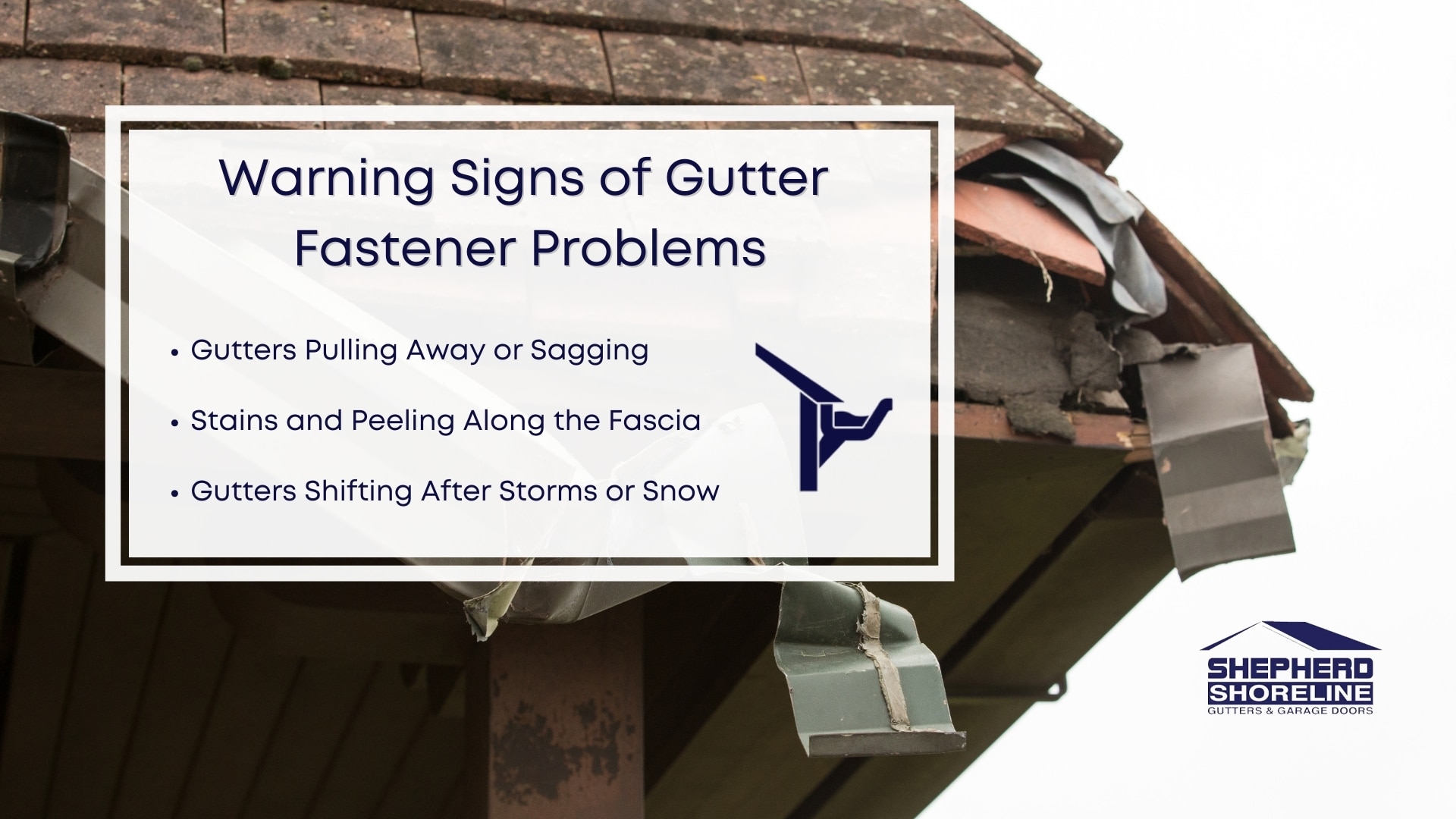
Gutter fastener issues often give subtle warnings before major damage occurs. Knowing what to look for can help you address problems early, before your fascia or roof edge is compromised.
Gutters Pulling Away or Sagging
If you notice sections that dip lower than others or gutters that appear to lean away from the house, the fasteners are either spaced too far apart or no longer holding securely in the fascia. Sagging gutters allow water to collect and overflow in the wrong places, increasing the risk of structural damage.
Stains and Peeling Along the Fascia
Water stains or peeling finishes on fascia boards are strong indicators that water is getting behind the gutter. That usually means fasteners have loosened enough to create gaps where moisture can seep in. Left unchecked, the damage spreads quickly and often leads to wood rot beneath the surface.
Gutters Shifting After Storms or Snow
If your gutters feel loose or shift after a heavy rainstorm or snowfall, that’s a clear sign the fasteners are failing. Gutters should remain firmly attached year-round. Movement after storms means the system is struggling to handle normal weather loads.
Schedule Professional Gutter Service with Shepherd Shoreline
Even the best gutter systems need the right fasteners, secure installation, and regular inspections to stay in top shape. If you’ve noticed sagging gutters or leaks after a storm, it’s time to get them checked before minor issues turn into major repairs. Shepherd Shoreline is here to provide trusted gutter solutions designed to hold up through heavy rain, snow, ice, and seasonal debris.
Our seasoned gutter technicians use high-quality gutter fasteners and professional installation techniques to make sure your gutters stay secure and drain properly year-round. Contact us today at (231) 780-2847 or here to schedule professional gutter service and get expert guidance, dependable workmanship, and peace of mind knowing your Muskegon home is protected from the top down.