
Gutters are designed to move water away from your roof, siding, foundation, and landscaping. But during a Michigan winter, that job becomes much harder. When temperatures rise and fall, water can collect inside the gutter, freeze overnight, thaw during the day, and freeze again. Over time, that cycle can slowly bend, pull, and weaken even a well-installed Muskegon gutter system.
- Why Ice Expansion Is Hard on Gutter Systems
- How Ice Causes Gutters to Warp
- Signs Your Gutters Are Being Damaged by Ice
- The Connection Between Iced Gutters and Ice Dams
- Preventing Long-Term Gutter Damage From Ice Expansion
The problem often starts small, and you might not notice anything wrong at first. A section of gutter might look slightly uneven, or water might start dripping from a corner after the ice melts. Once the damage begins, it can get worse with every storm. Let’s explore further how ice expansion affects gutter systems and what you can do to protect your home before small issues turn into expensive repairs.
Why Ice Expansion Is Hard on Gutter Systems
As water turns into ice, it expands. If that water is trapped inside a gutter, around a seam, behind debris, or near a downspout opening, the expanding ice needs somewhere to go. Since the gutter is a fixed channel, that pressure can push against metal, loosen joints, and strain the areas where sections connect. That’s especially hard on seams, corners, hangers, and gutter fasteners because those parts already carry much of the system’s weight and tension.
Repeated freeze–thaw cycles slowly wear the system down. During the day, snow and ice might melt and refill the gutter. At night, that water freezes again and expands. Michigan winters create the right conditions for that cycle to repeat for weeks or months. That’s why gutter warping often develops slowly before it becomes obvious. A gutter might sag a little more each season, a hanger might loosen gradually, or a seam might open just enough to leak after the next thaw.
How Ice Causes Gutters to Warp
Gutters are designed to carry flowing rainwater, not heavy, frozen blocks of ice mixed with leaves, dirt, and roof runoff. When ice sits in one section for too long, it creates uneven weight. One area might be packed with frozen debris while another remains clear. That uneven load can cause the gutter to twist or pull away from the fascia. Once the slope changes, water no longer drains the way it should, allowing more standing water to freeze in the same weak spots.
Expansion pressure can further push seams and corners apart. As the trapped water freezes, it presses against the gutter walls and connection points. At the same time, the weight of the ice pulls downward, placing extra force on the hangers attached to the fascia. Over time, those hangers can loosen, leaving the gutter less secure. That’s how a small iced gutter problem can turn into a warped system that struggles to move water away from your home.
Signs Your Gutters Are Being Damaged by Ice
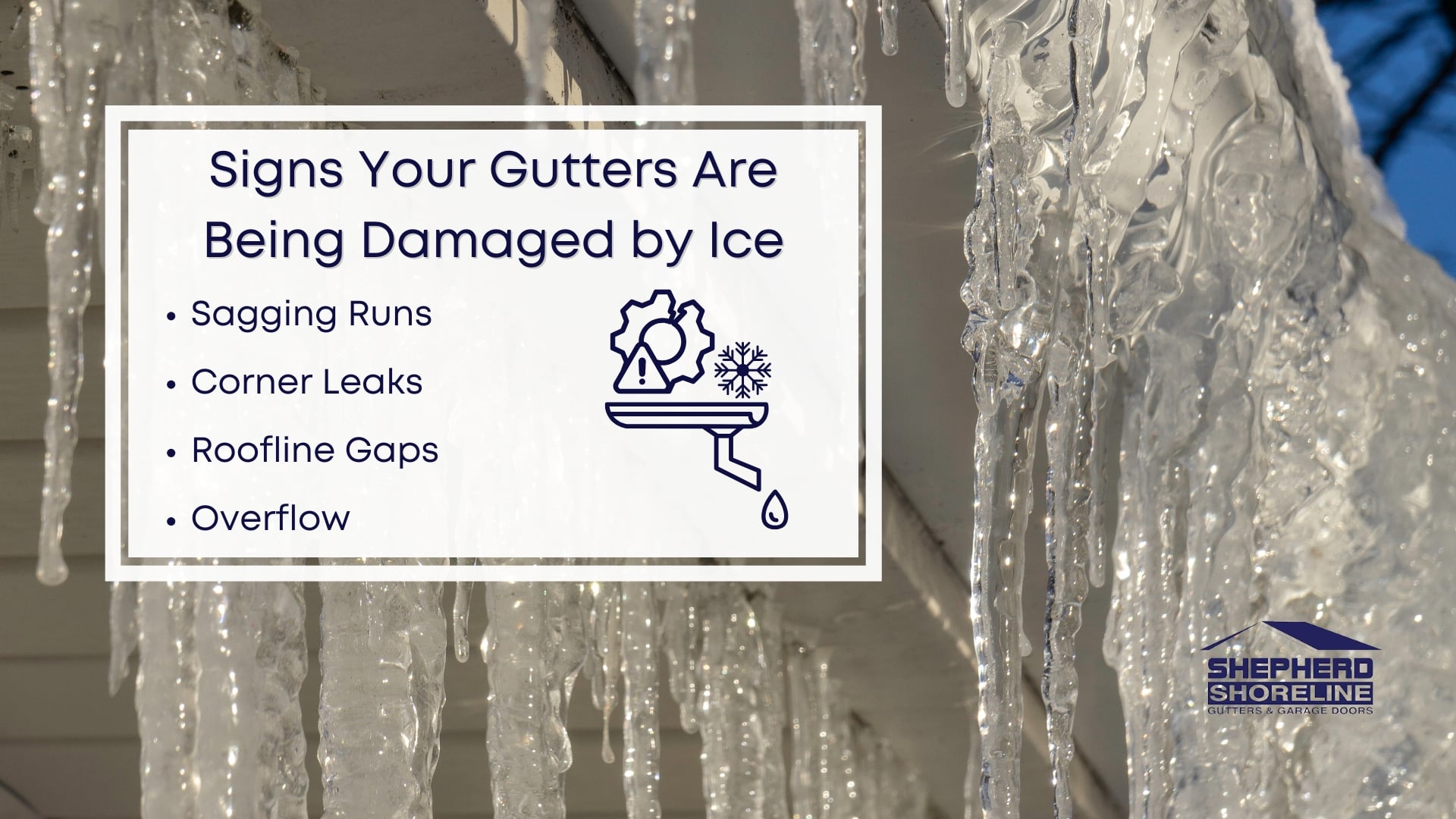
Ice damage can be easy to miss because it often shows up after winter has passed. Once the snow melts and spring rain begins, you might start seeing problems that were building all season. Here are some common warning signs to watch for:
Sagging Runs
During winter, snowmelt can collect in the gutter and freeze into a heavy block. If that happens repeatedly, the gutter might begin to dip in the areas carrying the most weight. Over time, that dip can affect the entire flow of the system. When one section drops lower than it should, water can collect there instead of draining away, and that standing water can lead to more freezing during cold nights and overflow during spring rain.
Corner Leaks
Leaks at corners or seams can point to ice-related damage. When water freezes near a seam, it expands and pushes against the gutter joint. After enough freeze–thaw cycles, the seam might separate slightly, allowing water to drip through once the ice melts. If ignored, what starts as a small leak can widen, and water might run down the siding, splash near the foundation, or create icy patches below the gutter.
Roofline Gaps
If your Muskegon gutters are pulling away from the roofline, ice might have loosened the hangers or fasteners holding them in place. That often happens when heavy ice pulls downward on the gutter while expansion pressure pushes outward from inside the channel. The fascia board then carries extra stress, and the fasteners can slowly work loose. If the gap gets wider, the gutter might no longer be able to handle heavy rain.
Overflow
Gutter overflow is easy to mistake for a simple clog. While clogs are common, recurring overflow at the same spot might indicate the gutter has warped. If one section keeps spilling over while the rest of the system drains normally, that area might have a hidden dip, blockage, or separated joint. Frozen debris left behind from winter can further create uneven stress points that affect drainage long after the ice melts.
The Connection Between Iced Gutters and Ice Dams
Iced gutters and ice dams often develop together because both involve trapped water and poor drainage. When gutters are clogged with leaves, dirt, or frozen debris, melting snow from the roof has nowhere to go. Instead of draining through the downspouts, the water sits near the roof edge and refreezes. As more snow melts and refreezes, ice can build up along the eaves. That buildup can block additional runoff, making the problem worse with each freeze–thaw cycle. In that way, a clogged or frozen gutter can help create the conditions for an ice dam.
Gutter guards can help reduce debris buildup and might lower the risk of clogs that contribute to winter drainage problems. However, the use of gutter guards for ice dam prevention is not guaranteed. If snow melts too quickly, refreezes at the roof edge, or forms ice over the guards themselves, drainage can still be affected. Moreover, proper roof ventilation and insulation can influence how evenly snow melts on your roof. If warm air escapes into the attic, it can melt snow from underneath, sending water toward the colder roof edge, where it refreezes.
Preventing Long-Term Gutter Damage From Ice Expansion
If your Muskegon gutters have been through several winters, a gutter inspection can reveal problems that are easy to miss from the ground. Loose hangers, separated seams, weak corners, and poor slope can all lead to bigger issues once ice begins to form. Fixing these problems early can help prevent water damage, roofline issues, and costly repairs later.
Shepherd Shoreline provides dependable Muskegon gutter solutions for homeowners who want their gutter systems ready for Michigan weather. Our experienced gutter technicians can inspect your current system and recommend the right repair, replacement, or protection options for your home. Contact us today at (231) 780-2847 or here to schedule gutter service.