
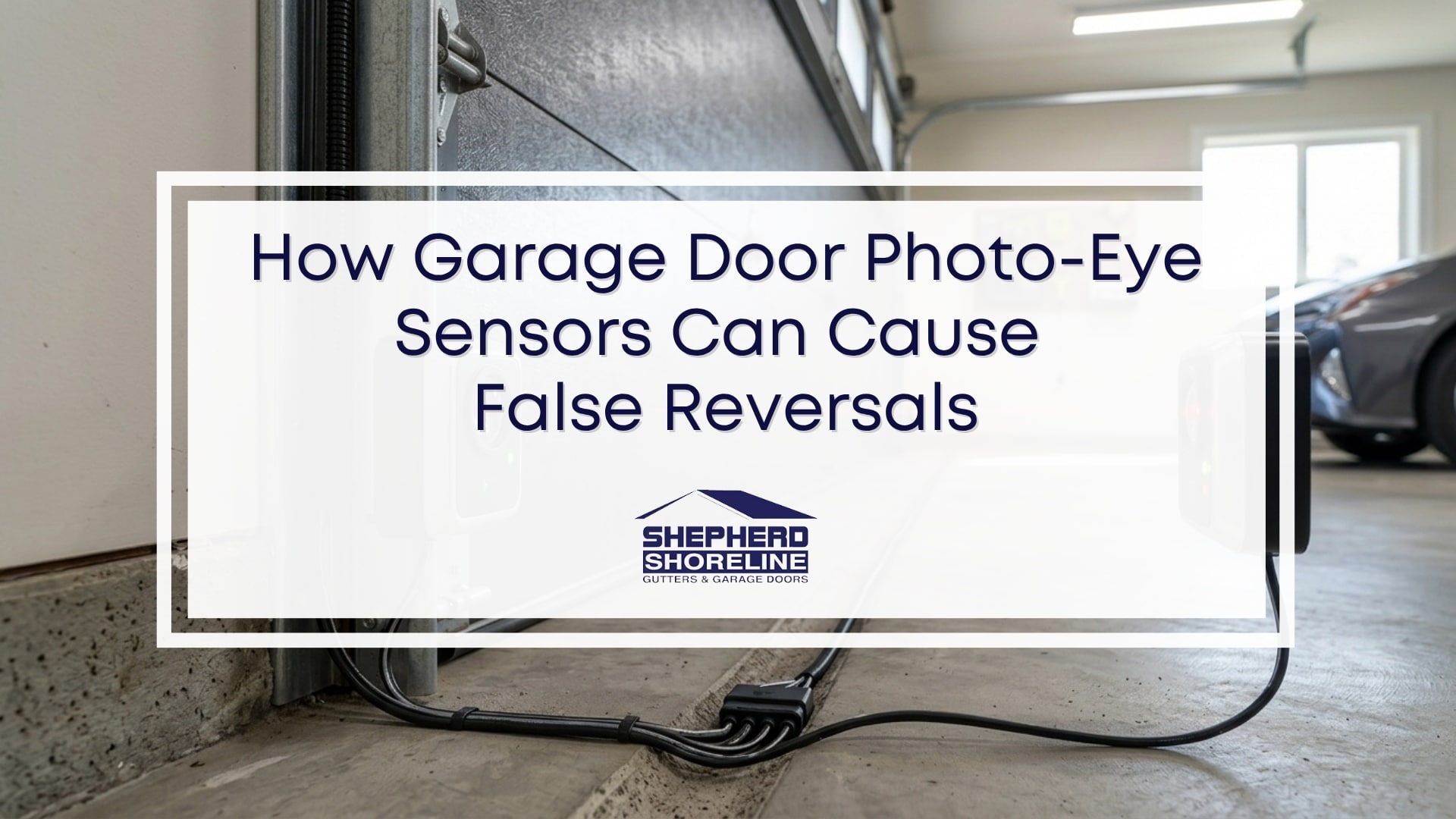
A garage door that starts closing and suddenly reverses can be frustrating, especially when nothing appears to be blocking its path. In many cases, the problem is not with the garage door opener or the door itself. Instead, the issue might come from the small safety sensors located near the bottom of the garage door tracks. Garage door photo-eye sensors are designed to prevent the door from closing when something is underneath it.
- What Garage Door Photo-Eye Sensors Do
- Why Sensor Alignment Problems Cause False Reversals
- Other Problems That Can Mimic Misalignment
- How Professionals Diagnose Photo-Eye Sensor Issues
- Restoring Safe and Reliable Garage Door Operation
Since these sensors depend on precise positioning, even a slight change in their alignment can affect how the door operates. A bumped sensor, loose mounting bracket, dirty lens, or even a wiring problem can make the system believe that an object is blocking the doorway. Let’s explore further how photo-eye sensors in garage door systems work, why alignment problems can cause false reversals, and what can be done to restore safe operation.
What Garage Door Photo-Eye Sensors Do
Garage door photo-eyes, or photoelectric sensors, are typically installed a few inches above the floor on opposite sides of the garage door opening. One sensor sends an invisible beam of light across the doorway while the sensor on the other side receives it. As long as the beam travels between the sensors without interruption, the garage door opener recognizes that the closing path is clear and allows the door to continue moving downward.
If a person, pet, bicycle, or an object interrupts the beam while the door is closing, the sensors signal the opener to stop and reverse the garage door. That automatic reversal helps reduce the risk of injury and property damage, making photo-eye sensors an essential garage door tech on modern systems. When working properly, you might rarely notice them, but even a small sensor problem can prevent the door from closing normally.
Why Sensor Alignment Problems Cause False Reversals
The two sensors must point directly toward each other for the safety system to work correctly. If one sensor moves slightly out of position, the beam might no longer reach the receiving sensor consistently. The garage door opener then interprets the broken connection as an obstruction and reverses the door, even though the doorway is completely clear. Depending on the opener, the door might begin closing before reversing or refuse to close unless you hold down the wall control.
Sensors can become misaligned for several reasons. Vibration from regular garage door operation might gradually loosen mounting hardware, while accidentally bumping a sensor with a garbage bin or stored item can shift its position immediately. Loose or bent brackets can leave the sensors at different angles or mounting heights. Because the beam must remain accurately positioned between both sides, even a small alignment difference can lead to repeated false reversals.
Other Problems That Can Mimic Misalignment
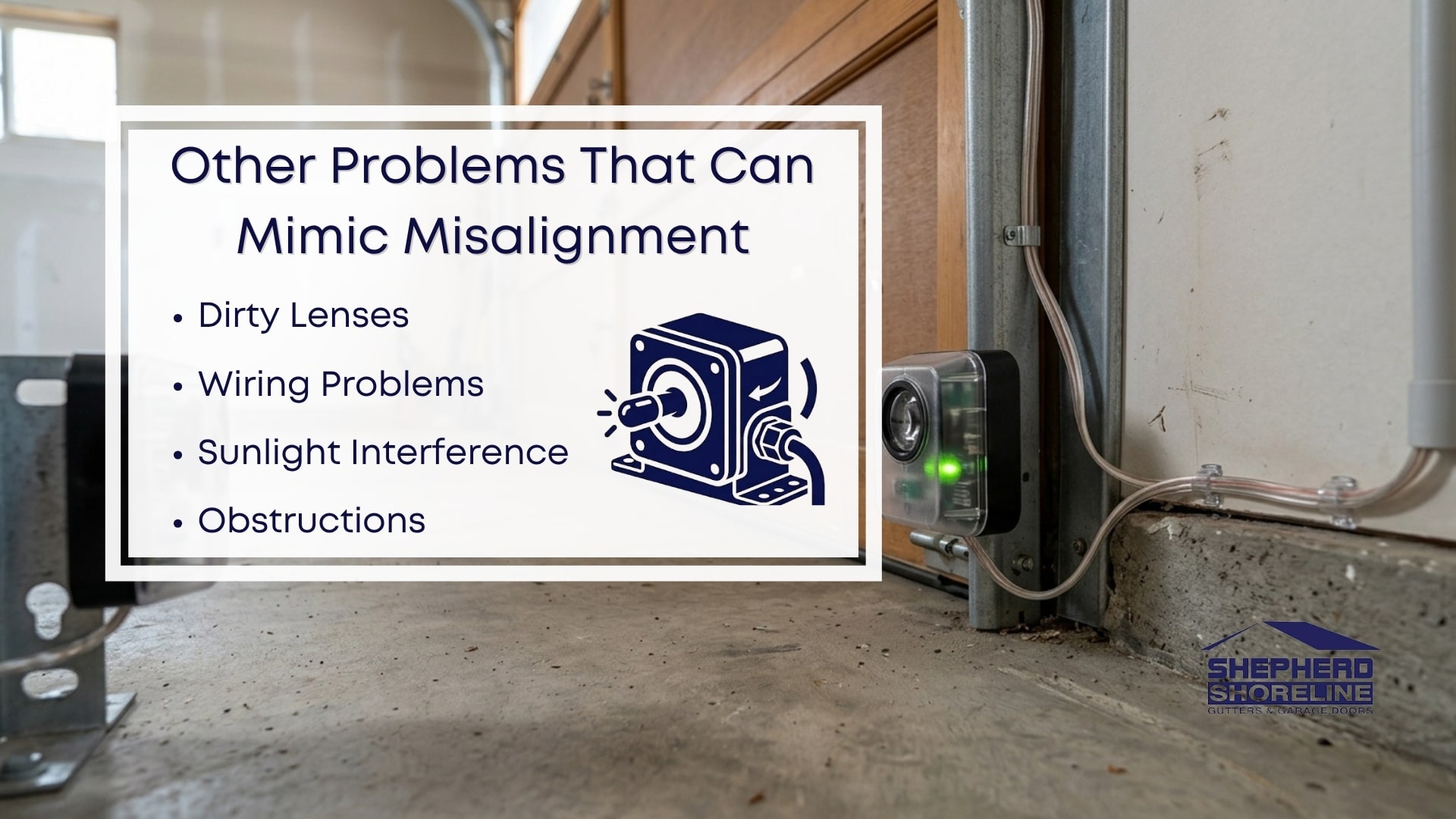
Misalignment is a common reason for photo-eye sensor problems, but it’s not the only possible cause. Several other conditions can interrupt the safety signal or make the sensors behave as though something is blocking the door.
Dirty Lenses
Garage floors naturally collect dust, dirt, leaves, and other debris, and some of that material can eventually settle on the sensor lenses. Cobwebs are another problem because spiders often build webs near corners and garage door tracks. Moisture or condensation might even cover the lenses under certain conditions. If enough material blocks the sensor, the invisible beam might not pass through properly. Carefully cleaning the lenses with a soft cloth can sometimes resolve the problem without further adjustment.
Wiring Problems
Each photo-eye sensor depends on wiring to communicate with the garage door opener. A loose connection or damaged wire can interrupt the signal even when the sensors themselves are correctly aligned. Wiring might become damaged when items stored near the tracks pull on it, or it can loosen because of garage door shaking or vibration. If you see damaged wires or the sensor indicator lights behave inconsistently, the electrical connections often need professional inspection rather than simply repositioning the sensors.
Sunlight Interference
Direct sunlight can sometimes interfere with the receiving sensor, particularly when sunlight shines directly into the sensor lens at certain times of the day. Perhaps you might notice that the garage door works normally in the morning but refuses to close later when the sun reaches a particular angle. Because the problem can resemble misalignment, checking when the issue occurs can provide an important clue. A Muskegon garage door repair professional can determine whether sensor positioning, shielding, or another adjustment is appropriate.
Obstructions
Objects do not have to be large to interfere with the sensor beam. A broom, extension cord, toy, garden tool, cardboard box, or other item placed close to the floor can interrupt communication between the photo-eye sensors in your garage door. Even something that appears to be outside the main path of the door can extend far enough to block the beam. Before assuming you need Muskegon garage door repair, inspect the entire area between the sensors first and remove anything that might be causing an obstruction.
How Professionals Diagnose Photo-Eye Sensor Issues
A professional inspection usually starts with the sensor indicator lights and the physical position of each unit. Many garage door photo-eye sensors have small lights that show whether the sensors are receiving power and communicating properly. A qualified Muskegon garage door repair technician can check whether the lights are steady, blinking, or off and compare those signs with the manufacturer specifications. Such professionals can then examine whether the sensors are pointed directly toward each other and mounted securely at the proper height.
The inspection might further include checking the brackets, wiring, and connections at the garage door opener. A seasoned technician can determine whether a bracket has become loose or bent, whether the sensor wiring has been damaged, and whether connections inside the system are secure. After making adjustments or repairs, the safety reversal system is often tested to confirm that the garage door responds properly when the beam is intentionally interrupted. The safety system must continue reversing the door when a real obstruction is present.
Restoring Safe and Reliable Garage Door Operation
Some sensor problems can be corrected through basic garage door maintenance. Keeping the lenses clean and removing items from the doorway might prevent unnecessary interruptions to the sensor beam. Loose sensor brackets might need to be tightened or carefully repositioned so both units face each other at the same height. However, damaged wiring, broken brackets, or faulty sensors might require replacement.
If your garage door continues reversing even after you have cleaned the lenses and cleared the doorway, Shepherd Shoreline can help identify the source of the problem. Our experienced Muskegon garage door repair professionals can inspect the sensors, brackets, wiring, opener connections, and other garage door components to determine what needs attention. Contact us today at (231) 780-2847 or here to schedule service.