
A garage door should open and close smoothly every time you press the button. When it reverses for no clear reason, stops before reaching the floor, or the opener keeps running after the door has stopped moving, many homeowners assume the problem is with the garage door springs, tracks, motor, or sensors. Those parts can cause trouble, but the main issue might come down to the garage door limit settings. Let’s explore how limit settings work, what signs point to incorrect adjustment, and why proper calibration matters for safe garage door operation.
- What Garage Door Limit Settings Control
- Signs Your Limit Settings May Be Incorrect
- Common Causes of Limit Setting Problems
- Restoring Proper Garage Door Operation
What Garage Door Limit Settings Control
Garage door limit settings control the up and down travel distance of your garage door. The garage door opener uses these settings to know where the fully open and fully closed positions are. The open limit controls how far the door travels upward, while the close limit controls how far the door travels downward. When both are properly set, the door opens high enough for safe entry and closes firmly against the floor without pressing too hard.
Modern openers rely on precise calibration because systems nowadays are designed to balance convenience with safety. If the close limit, for instance, is set too far, the opener might push the door into the floor and then reverse, thinking it has hit an object. If the open limit is too short, the door might not rise high enough for your vehicle to pass safely underneath. Incorrect settings can make the door unreliable, place stress on the opener, and create safety concerns.
Signs Your Limit Settings May Be Incorrect
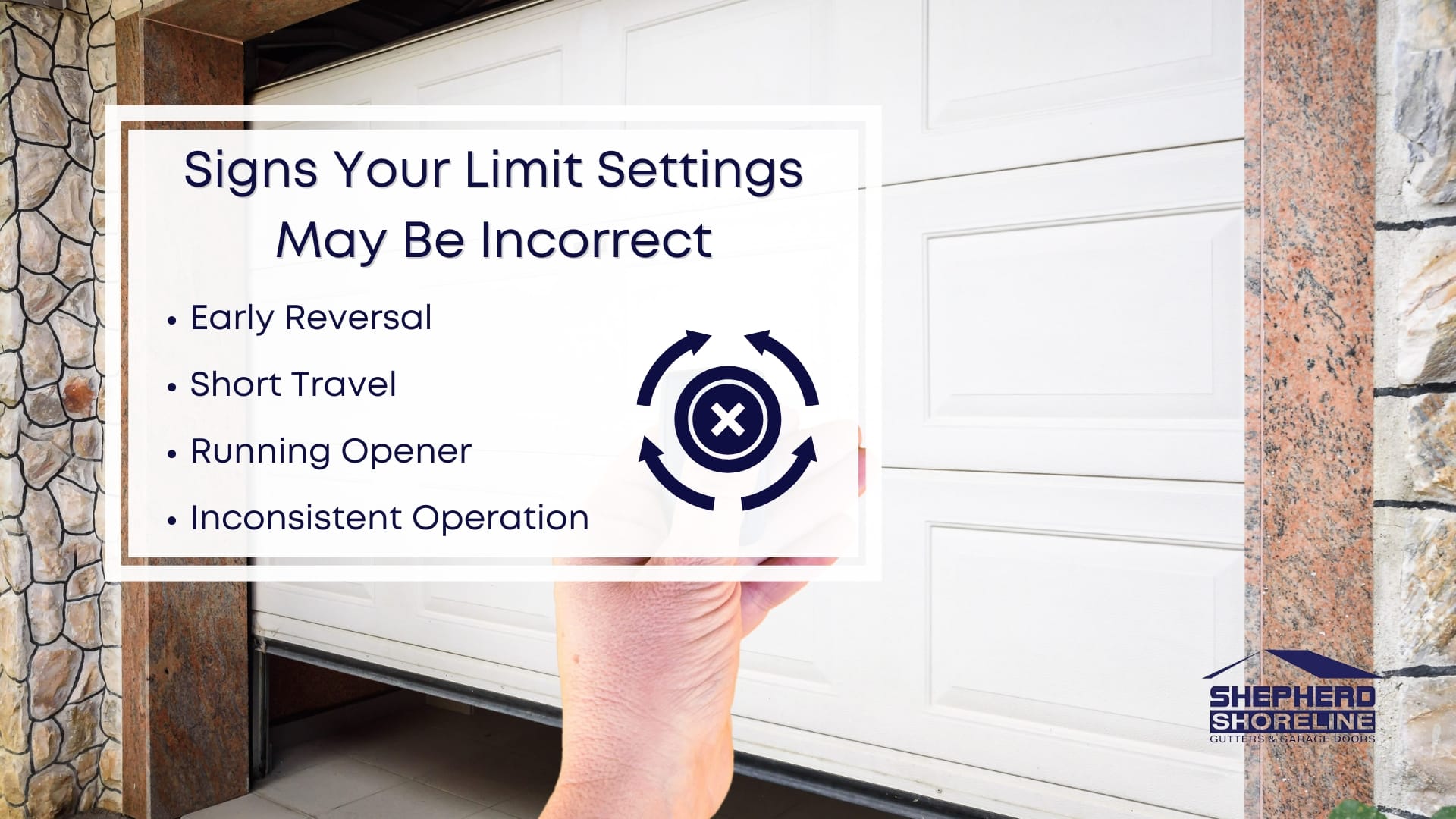
When garage door limit settings are not properly adjusted, the symptoms are often easy to notice. These warning signs can help you recognize when your limit setting might need attention:
Early Reversal
Does your door reverse before it fully closes? Perhaps you might press the wall button or remote, watch the door move down, and then see it go back up just before it touches the floor. That can happen when the opener believes the door has met resistance. While safety sensors, track problems, or damaged rollers can cause reversal, a close limit set too far can make the opener push against the floor and trigger the reverse function.
Short Travel
If the garage door stops several inches above the ground, the close limit might be telling the opener that the door has already completed its downward travel. If it does not open all the way, the open limit might be set too low. That can leave your garage exposed to weather elements, pests, and security risks. It can further make it difficult or unsafe to move vehicles, bikes, lawn equipment, or storage items in and out of the garage.
Running Opener
When the garage door opener has not properly registered the end of the door travel, the motor might keep trying to move the door even though the door is already at its stopping point. That’s not something you should ignore. Continued strain can wear down the opener or place stress on the door system. If you hear the motor running longer than usual or clicking repeatedly, it might be time to have the opener and limit settings inspected.
Inconsistent Operation
The garage door might close correctly one time, stop short the next time, and reverse after that. Such behavior can be especially confusing because the problem does not always happen the same way. Loose hardware, worn opener parts, or shifting old tracks can affect performance, but incorrect limit settings are worth checking when your door no longer moves reliably, especially if the opener is older or recently adjusted.
Common Causes of Limit Setting Problems
Garage door limit settings can fall out of adjustment for several reasons. Knowing these common causes can help you understand whether a simple adjustment might be enough, or the system needs a closer inspection:
Power Interruptions
After an outage, surge, or an opener reset, the system might not respond the same way it did before. Some smart garage door openers store travel limits electronically, while others depend on manual adjustment points. If the opener loses its programmed travel range or needs to relearn the door movement, the door might stop short, reverse, or run longer than normal. When that happens, the opener might need to be recalibrated so it knows exactly where the door should stop in both the open and closed positions.
Vibration and Wear
A garage door system moves through many cycles each year, and each cycle creates vibration through the opener, rail, brackets, chain, belt, and door hardware. Small shifts might not cause an immediate problem, but can slowly affect how the opener reads the door travel distance. Screws, brackets, or adjustment points might loosen slightly, and the opener might work harder if rollers, hinges, or tracks begin to wear. Over time, these small changes can make the garage door stop a little too soon or reverse without an obvious obstruction.
New Installation and Repairs
If you install a new garage door, replace an opener, change springs, or adjust tracks, the door travel and balance can change. Even a garage door repair that seems unrelated to the opener can affect calibration. For example, new springs might help the door move more smoothly, while worn springs might have caused the opener to work harder before the repair. Once the door movement changes, the old limit settings might no longer match the system. That’s why proper testing is essential after any major garage door work.
Component Issues
Not every reversing or stopping problem comes from the limit settings. Sometimes an obstruction or mechanical issue is mistaken for a limit problem. A bent track, worn roller, loose cable, weak spring, or object near the bottom seal can create resistance during travel. When the opener senses that resistance, it might reverse or stop as a safety response. Sensor issues can create similar symptoms, especially if the door reverses before touching the floor. It’s always best to have a garage door professional check the full system.
Restoring Proper Garage Door Operation
When your garage door reverses or stops short, it’s tempting to keep pressing the remote and hope it works on the next cycle. That might get the door moving temporarily, but it might not solve the cause. Repeated operation can put extra stress on the garage door opener, tracks, rollers, springs, cables, and other components. Moreover, it can leave your garage less secure if the door does not fully close. Proper repair starts with finding out the real issue.
Shepherd Shoreline offers dependable Coopersville garage door repair and Allendale garage door repair for homeowners dealing with opener problems, door movement issues, and incorrect limit settings. Our experienced garage door technicians can inspect your system, identify the main cause of the problem, and restore smooth, reliable operation. Do not wait for the problem to get worse. Contact us today at (231) 780-2847 or here to schedule repair service.