
When your gutters overflow in one specific area, the problem is not always caused by a clogged system or poor installation. In many homes, the trouble starts where two roof sections meet and direct water toward the same point. That area is called a roof valley, and it can send a large amount of runoff into one small area of the gutter. During a heavy downpour, that concentrated flow can rush down the valley, hit the gutter hard, and, over time, lead to gutter sagging, fascia damage, basement moisture, soil erosion, and repeated calls for Muskegon gutter repair.
- Why Roof Valleys Create Unique Drainage Challenges
- Common Causes of Overflow Near Roof Valleys
- Preventing Long-Term Water Damage Around Roof Valleys
If you keep seeing overflow in the same spot, the solution might be as simple as cleaning out debris or adjusting a downspout. But in some cases, you might need better roof valley runoff solutions or help from a Muskegon gutter installer who can look at your roof shape, gutter size, downspout placement, and trouble areas to determine why water is not draining properly. Let’s explore why roof valleys create drainage problems and what causes gutters to overflow in these high-volume areas.
Why Roof Valleys Create Unique Drainage Challenges
A roof valley collects water from two or more roof planes and sends it toward one exit point. Instead of rain spreading evenly across the entire roof edge, it gathers in the valley and moves in a narrow stream. During a light rain, that might not be a problem. But during a steady storm, that valley can act similarly to a funnel. Water from a large roof surface is pushed into one small area of the gutter, creating more pressure than nearby sections experience. Even if the gutter looks properly installed, it might still struggle if the valley sends too much water into one area too quickly.
Furthermore, the pitch of the roof affects how fast the water moves through a valley. A steep roof can send runoff down with greater speed, causing water to overshoot the gutter or splash over the front edge. A lower-slope roof, on the other hand, might move water more slowly, but it can still produce heavy volume during long rains. Standard gutter layouts are often designed to catch water along the roof edge, but roof valleys place extra demand on specific points. That’s why one area might overflow even while the rest of the gutter system appears to be working normally.
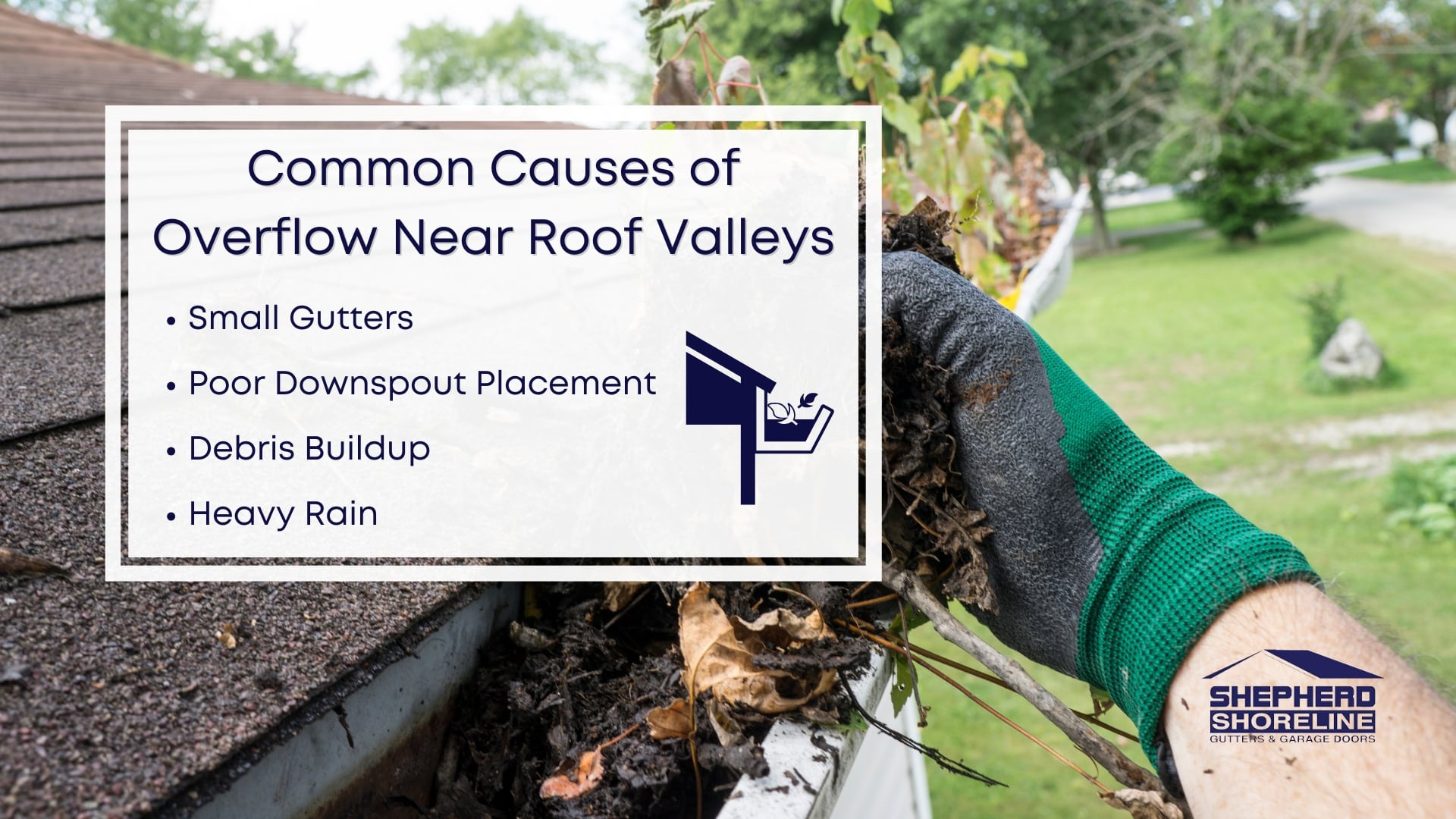
Common Causes of Overflow Near Roof Valleys
Water overflow near a roof valley usually happens because the gutter system cannot manage the amount, speed, or direction of water entering that area. Here are the most common reasons you might see water spilling over near a valley exit:
Small Gutters
A standard Muskegon gutter might work fine along a simple roofline, but it might not have enough capacity where a valley drains a large roof area. When the water volume exceeds what the gutter can carry, it has nowhere to go but over the edge. That’s especially common during heavy rain, when water rushes down the valley faster than the gutter can move it toward the downspout. In these cases, roof valley runoff solutions might include larger gutters, a wider outlet, better gutter placement, or added components to control the flow.
Poor Downspout Placement
Downspouts need to be placed where water naturally collects and exits the roofline. If the nearest downspout is too far from the roof valley, water may fill the gutter faster than it can drain. That creates a backup near the valley, causing overflow in the same spot during every heavy rain. Even if the gutter is clean and properly sloped, poor downspout placement can limit performance. Adding a downspout closer to the valley or increasing outlet size might help move water away before it spills over the front edge.
Debris Buildup
Roof valleys often carry leaves, twigs, shingle grit, and other debris into the gutter. Because water exits the valley with force, debris can collect at the discharge point and create a blockage. Once that area is clogged, water has nowhere to go and starts spilling over the edge. Even a partial blockage can slow drainage enough to cause overflow during a storm. Regular spring cleaning helps, but if debris keeps gathering in the same place, you might need added protection, such as gutter guards, to keep the roof valley gutter area clear.
Heavy Rain
Sometimes the gutter system might be clean and properly installed, but the rain simply comes down too fast. Heavy rain can overwhelm the gutter, especially near roof valleys where runoff is already concentrated. When the volume of water exceeds what the gutter and downspouts can handle, overflow might happen. That does not always mean the entire system is failing, but it shows certain areas might need added support. Improving drainage near valley exits can help reduce repeated overflow and protect your home from water damage.
Preventing Long-Term Water Damage Around Roof Valleys
When water keeps overflowing in the same area, it can slowly damage the parts of your home that are meant to stay dry. Fascia boards can soften, siding can stain, soil can wash away, and water can collect near the foundation. If the problem happens near an entryway, walkway, or driveway, the runoff can create slippery surfaces and annoying puddles. These issues can cost more to fix than the gutter problem itself.
Shepherd Shoreline provides reliable Muskegon gutter repair and installation services for homeowners who want their gutter systems to work where it matters most. Our seasoned Muskegon gutter installers can inspect roof valleys, assess gutter capacity, check downspout locations, and recommend practical roof valley runoff solutions to help you avoid long-term water damage. Contact us today at (231) 780-2847 or here.