
If you live in West Michigan, especially around lakeshore communities, you’ve probably noticed that water behaves differently from one yard to the next. One home might stay dry after a heavy storm, while another ends up with standing water near the foundation or soggy patches that never seem to dry out. The difference often comes down to the soil beneath your feet.
- Understanding Michigan’s Soil Types
- How Clay Soil Impacts Home Drainage Systems
- How Sandy Soil Creates Different Drainage Challenges
- Drainage Problems Linked to Improper System Design
- Protect Your Home’s Drainage with Shepherd Shoreline
Soil type affects how quickly rain soaks into the ground, where runoff flows, and how much pressure builds up around the foundation of your property. Let’s explore how Michigan soil types influence the performance of your house drainage system so you can make smarter decisions about drainage solutions, including gutters and runoff control, to protect your property.
Understanding Michigan’s Soil Types
In many parts of West Michigan, homes sit on clay soil, sandy soil, or a blend of both. Each soil composition behaves very differently when it comes to water. Clay soil is made up of very fine particles packed tightly together. Because the spaces between particles are so small, water moves through clay very slowly. Sandy soil is the opposite. Its larger particles leave plenty of space for water to flow through.
Two homes built in the same year with similar layouts can experience very different drainage problems simply because of soil differences. One neighborhood may struggle with soggy lawns and basement leaks, while another deals with erosion or shifting soil near the foundation. Lot grading and how well runoff is managed can further change how water behaves. That’s why drainage issues can be so unpredictable.
How Clay Soil Impacts Home Drainage Systems
Clay soil has poor permeability, meaning water moves through it very slowly. After a heavy rain, water tends to collect on the surface instead of soaking in, leading to standing water near foundations, walkways, and low spots in the yard. As clay soil becomes saturated, it swells and holds water tightly, creating hydrostatic pressure, a force pushing against your foundation walls. That pressure can cause cracks, leaks, and moisture intrusion in basements or crawl spaces.
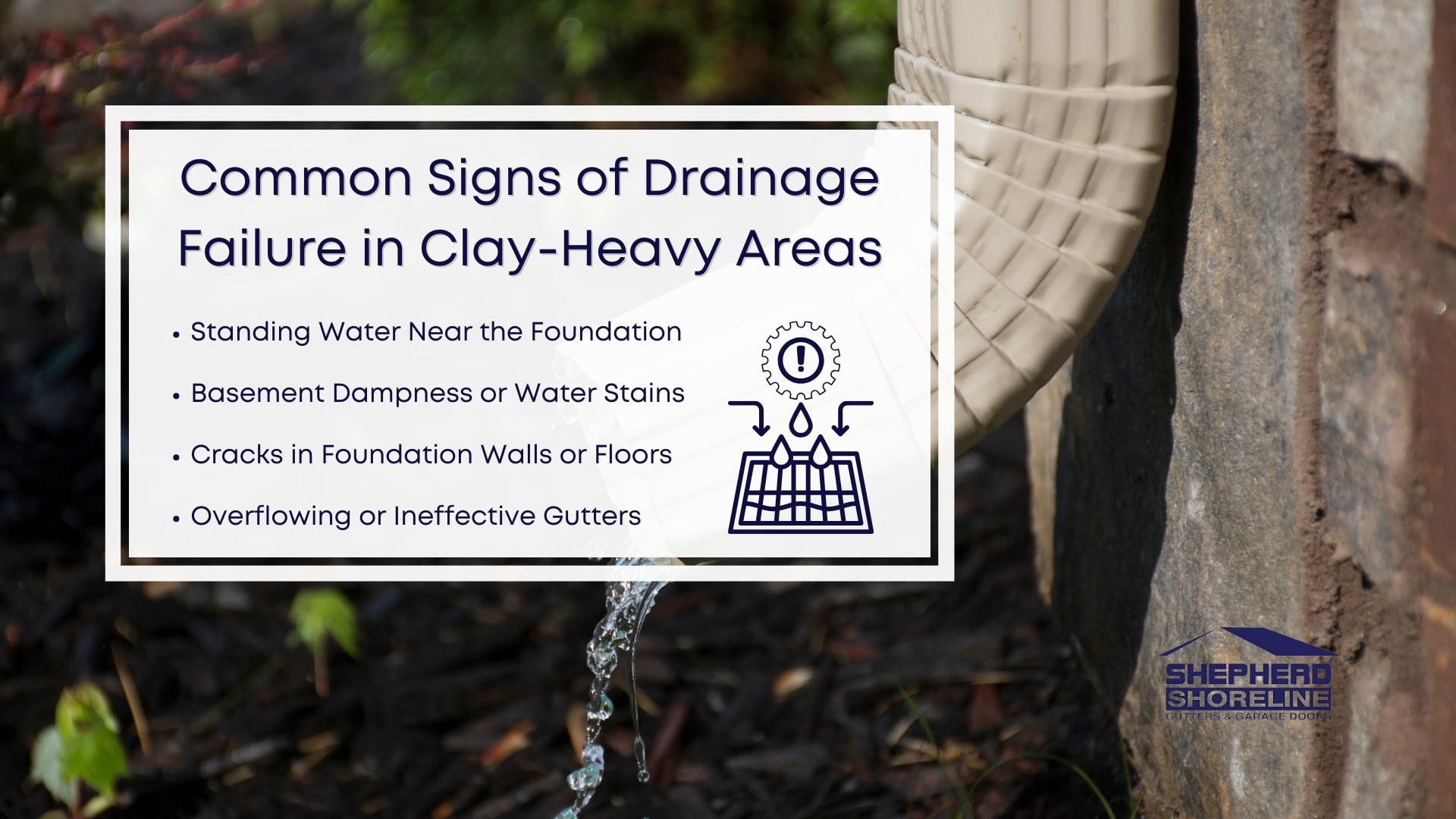
Common Signs of Drainage Failure in Clay-Heavy Areas
Clay-heavy soil problems often show up in subtle ways before turning into serious drainage or foundation issues. If your home sits on clay soil, watch for these warning signs:
- Standing Water Near the Foundation
Puddles that remain long after rain usually mean water isn’t draining properly through the soil.
- Basement Dampness or Water Stains
Moisture on basement walls or floors often points to water pressure building up outside due to poor soil drainage.
- Cracks in Foundation Walls or Floors
Repeated pressure from saturated soil can stress concrete, leading to visible cracking in the foundation walls or floors.
- Overflowing or Ineffective Gutters
When water can’t soak into the ground, even properly sized gutters can struggle if runoff isn’t carried far enough away.
Recognizing these signs early makes it easier to adjust drainage solutions before water causes long-term issues around your Muskegon property.
How Sandy Soil Creates Different Drainage Challenges
Sandy soil drains water quickly, which can sound like a good thing at first. After heavy rain, you rarely see puddles lingering in the yard. But that fast drainage can still create problems. As it flows through sandy soil, it can carry soil particles with it, leading to erosion and washouts around your home. Over time, that movement can leave voids beneath walkways, patios, or even parts of the foundation, especially if water is repeatedly funneled to the same area.
Furthermore, when soil washes away unevenly, parts of your foundation might lose support, causing cracks, sloping floors, or sticking doors and windows. That’s why, even though sandy soil doesn’t trap water the way clay does, it still needs a properly designed house drainage system to slow down and control where water goes. Without that control, even well-functioning Muskegon gutters can end up feeding water into areas where it does long-term damage.
Drainage Problems Linked to Improper System Design
Soil type is only part of the equation. Even the “right” soil can’t compensate for a poorly designed drainage setup. One of the most common problems is improper grading. If the ground around your Muskegon home, for instance, slopes toward the foundation instead of away from it, water naturally flows where you don’t want it. In clay soil, it leads to pooling and pressure against the basement walls. In sandy soil, it can mean fast-moving water stripping soil away from the foundation.
Downspouts that discharge too close to the house create another major issue. When roof runoff is dumped right next to the foundation, it overwhelms the surrounding soil, regardless of type. Clay becomes saturated and holds moisture, while sandy soil erodes and shifts. That’s why Muskegon gutters must be paired with properly placed downspouts that carry water several feet away from the home. Simply installing gutters isn’t enough if water isn’t directed to a safe discharge point.
One-size-fits-all drainage solutions often don’t work in Michigan. Clay-heavy neighborhoods need strategies that relieve water pressure and move moisture away slowly and consistently. Sandy areas need solutions that control flow and prevent erosion. A system designed without considering soil conditions often fails early, leading to repeat repairs and ongoing water problems. The most effective drainage plans are tailored to how your soil behaves, not just how your home looks on paper.
Protect Your Home’s Drainage with Shepherd Shoreline
No matter what type of soil your home sits on, your gutters and downspouts play a major role in protecting your foundation. Even the best-designed house drainage system can fail if roof runoff isn’t captured and directed away properly. Well-installed gutters collect water efficiently, while properly positioned downspouts carry it far enough from your home to prevent pooling, erosion, and foundation stress.
Shepherd Shoreline can help you strengthen the first line of defense of your home against drainage problems. Whether you need new gutter installation or downspout extensions, our experienced Muskegon gutter specialists make sure your house drainage system moves water exactly where it should go. Contact us today at (231) 780-2847 or here to learn more about gutter installation, repair, and maintenance options.